-
#620 – Butts Mill, Leigh 1
I stumbled across this place a few years ago when I was driving past and didn’t have a camera with me, and it’s taken me a long time to go back to take a closer look. It’s an impressive place and, well the Historic England listing describes it better than I ever could: “Cotton spinning…
-
#619 – Higher Walton Mill 2
I wanted to take some alternative views of the mill but struggled to find a perspective I liked as not only is the mill set back from the road, it’s at an angle to it as well as below the road level. The perimeter fence did catch my eye though. It’s not something I’d normally…
-
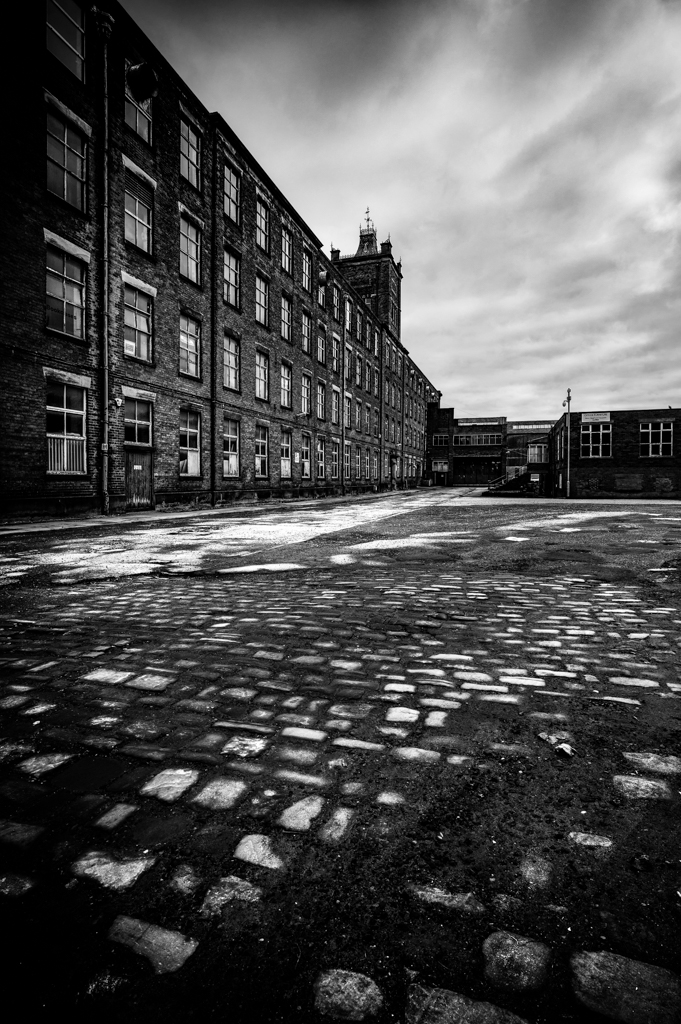
#618 – Higher Walton Mill 1
Like many Lancashire towns, Preston once had dozens of cotton mills, but very few have survived. There are of course a couple of significant exceptions, with the refurbished Hesketh Mill on New Hall Lane being something of a landmark as you approach the city centre, and the gigantic Tulketh Mill – complete with chimney –…
-
#617 – Lees Brook Mill 3 – notes on composition and creativity
It’s a few months since I posted about this place, and my attention has been elsewhere this year, so I’d forgotten that I’d started to write this! As I mentioned in the initial post, the catalyst for this visit was seeing this post on Instagram, and although I’d seen the mill when driving in the…
-
#616 – Interview feature in Black and White Photography Magazine Issue 277
I’m delighted to announce that I have been interviewed for issue 277 of Black and White Photography Magazine. This is on sale in newsagents in the UK until mid-May 2023.
-

#615 – Lees Brook Mill 2 – Reflections and other perspectives
Legend has it that Oldham once had over 360 mills chimneys – ‘one for every day of the year’ which meant that it had at least as many mills. Indeed, Oldham was the centre of the world when it came to cotton production – in 1913, 10% of the world’s production came from Oldham and…
-
#614 – Lees Brook Mill 1 – getting going again and a new camera
I didn’t do much by way of industrial photography in 2022. I’d organised a 3 day trip to south wales in March to photograph a number of places for my ongoing coal and steel projects but then caught Covid on the day I was travelling and had to cancel all my arrangements. After that, other…
-
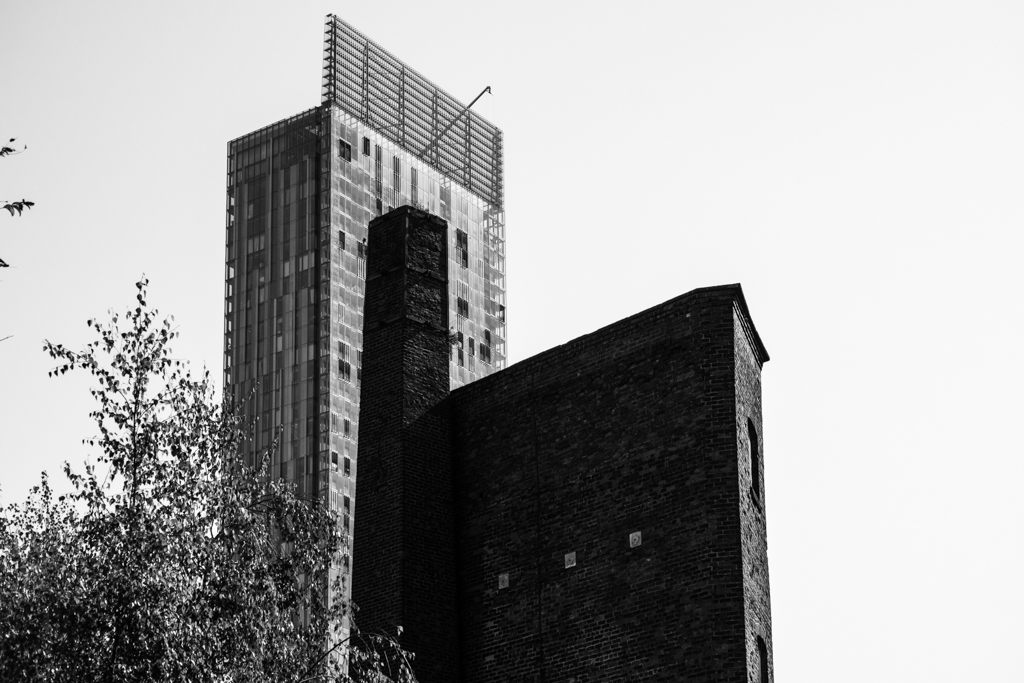
#613 – Manchester – A Strange Survivor From The Past
Much of Manchester’s industrial past is exactly that – in the past. For better or worse, there is less and less evidence that it was a major industrial city and the skyline is now one of shimmering glass towers. I did think that the only remaining chimney was at Bloom Street power station, itself now…
-
#612 – Redcar Blast Furnace – Last Chance To See: Part 3
We get nostalgic – protective even – of landmarks. For me as an observer, this is an interesting piece of engineering and industry, but for many locals, it represented something, as did its removal from the landscape. I’ve been a member of a Teeside steelworks Facebook group for a few years and it’s open to…
-
#611 – Redcar Blast Furnace – Last Chance To See: Part 2
A man with an enormous Leica and a chap who had retired as technical manager at the nearby Skinningrove steelworks were also photographing and we struck up a conversation as photographers often do. Both were local and far more informed than I, an outsider to the area and industry. We were joined by a photographer…
-
#610 – Redcar Blast Furnace – Last Chance To See: Part 1
I’ve been intrigued by the blast furnace at Redcar for many years, and have made 5 trips to photograph it since 2009. Most of the British steel industry had gone by the time I started photographing industry in the mid-2000’s, and I didn’t grow up in an area that had any steelmaking (well, there was…
-
#609 – Lancashire Rural Industry 3 – Bridge Clough Mill Chimneys
On a walk round Bacup, I noticed these chimneys in a valley, so I went for a closer look. I know of a few isolated chimney’s around the north west as they were often placed away from the mill on a hillside to increase the draught, but these were literally off the beaten track. There’s…
-

#608 – Lancashire Rural Industry 2 – Hill Top Colliery
I’ve written before about Lancashire’s coalfield so my few regular readers will have to excuse the brief recap. While not as big or as long lasting as Yorkshire’s or Nottinghamshire’s, it was certainly one of the main mining areas earlier in the 20th century and extraction was concentrated around south Lancashire in a belt that…
-
#607 – Lancashire Rural Industry 1 – Cheesden Lumb Mill
This mill had been on my list of places to look at for many years, but it’s one of those places that is not going to be demolished (although it could just fall down of it’s own volition, I suppose) so has never been a priority to visit. This is another one of those long…
-
#606 – An updated typology
My last update to the typology was a 3×3 grid as can be seen in this post back in April, or if you can’t be bothered reading that, see below for just the picture. I’ve decided to go with a three row format which means that the total number of images must be divisible by…
-
#605 – Woodhorn Colliery
One of my current long term projects is photographing the remaining mining headgear / headstocks in the UK, and displaying these in a ‘typlogy’ format à la Bernd and Hilla Becher. I’d only managed to visit two sites this year – the unusual clad structure at Meadowbank Mine in Winsford, and the two at Snibston…
-
#604 – Crewe Works – Lili Rethi revisited
Back in 2014, I wrote a blog post about the marvellous railway poster created by Lili Rethi for the LMS in 1937. In it, a Coronation class locomotive is being built at Crewe Works in a very masculine style. It’s a poster I’ve admired for many years, and about twenty years ago I bought a…
-
#603 – Meadowbank Salt Mine – Part 3
In comparison to the rest of the headstocks I’ve photographed, Meadowbank mine is frankly weird looking. Of course, these are functional structures designed by an engineer to fulfil a purpose and without a thought to aesthetics. But this one…….it looks like someone is trying to hide or disguise it with all that cladding, like the…
-
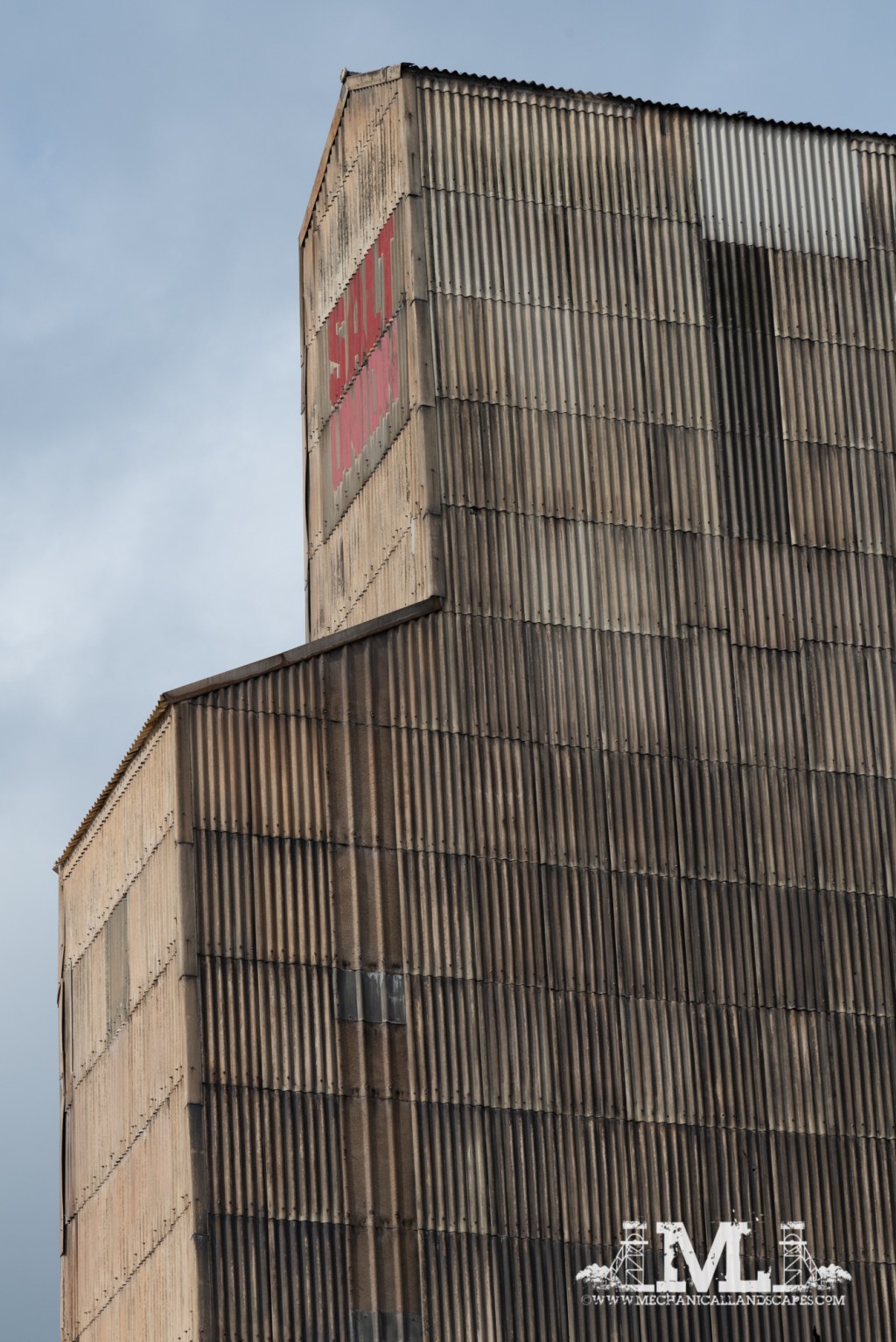
#602 – Meadowbank Salt Mine – Part 2
The mine is unusually long and thin, with not much surface infrastructure compared with a coal mine. That said, there is no need for a washery, and there is crushing machinery underground, so all that is on the surface is a long conveyor that takes the salt to a storage building where it is then…
-
#601 – Meadowbank Salt Mine – Part 1
I’ve known about Cheshire’s salt mines for years, but never got round to finding out more about them until recently. There’s only one left, but it’s routinely in the news in winter as it supplies the majority of the salt spread on Britain’s road (as well as 57% of the table salt you put in…
-
#600 – The Art of the Panorama Part 4 – Scunthorpe
A panorama crop is ideal here – the scale of the place lends itself well to a wider aspect ratio, but join up panoramas are impossible due to being on a moving train! I must admit that I didn’t take many of these with a panorama in mind, but some just suited a panoramic crop.…
-
Subscribe
Subscribed
Have a WordPress.com account? Log in now.

