
As I moved out of Blackburn in 2004 and stopped working there in 2006, I rarely go back unless I have to. It’s a town I have mixed memories of, and as I wasn’t born there, and most of my friends from there have also moved elsewhere, so there’s little to take me back.
Nonetheless, I’d read that Imperial Mill was about to finally be refurbished. It was in a poor state when I last photographed it nearly 20 years ago but was still in use until recently by its owner The Lancashire Saw Company. The mill was previously owned by Courtaulds who closed it in 1980, and it was unusually large for East Lancashire where mills were typically smaller than the giant mills of south and central Lancashire. It was also one of the few surviving mills in Blackburn, and was Grade 2 listed.
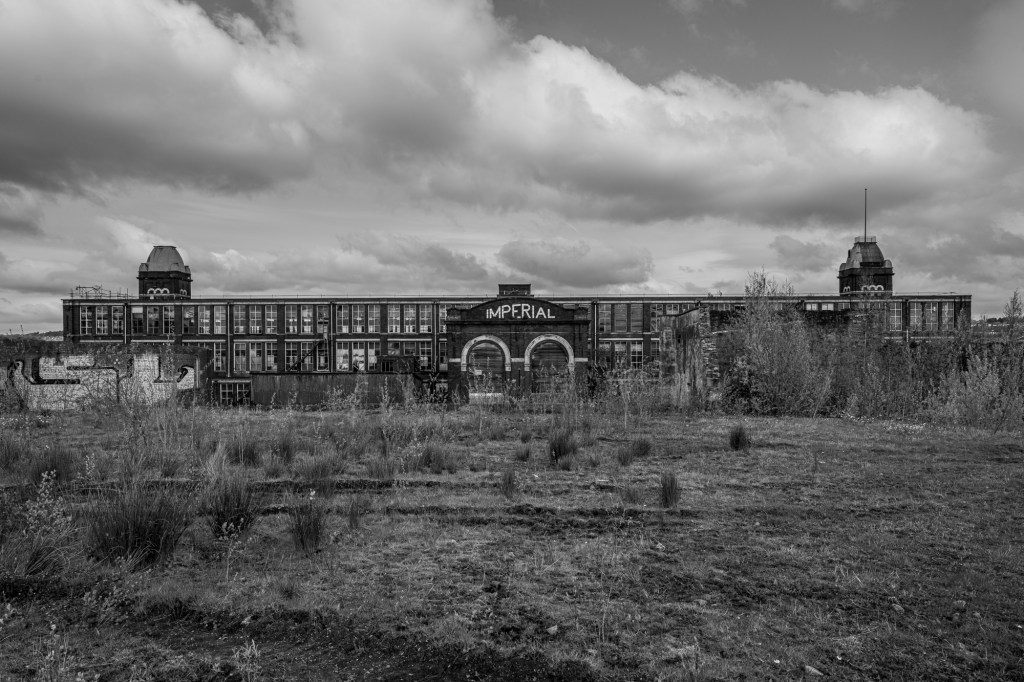
Blackburn with Darwen Council bought the mill in 2023 and intend to develop it as part of their ongoing regeneration of the Greenbank area of town, something that’s been going on for years as quite frankly the area is a dump and has been for as long as I can remember. But with the a new link road bringing traffic into town from the motorway, the mill is regarded as a bit of a landmark development.
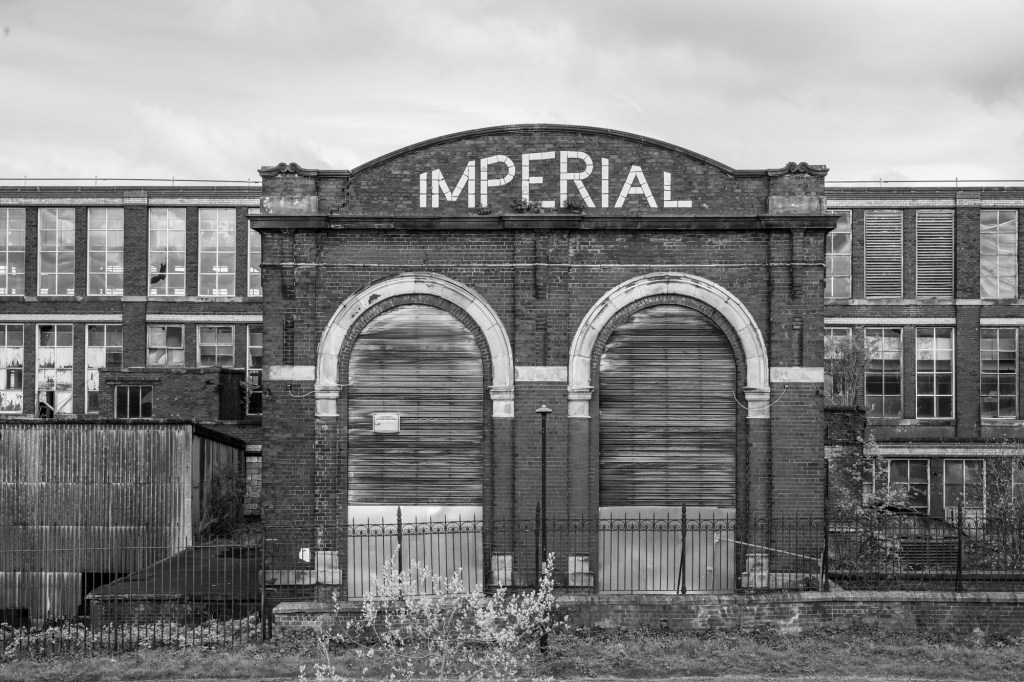
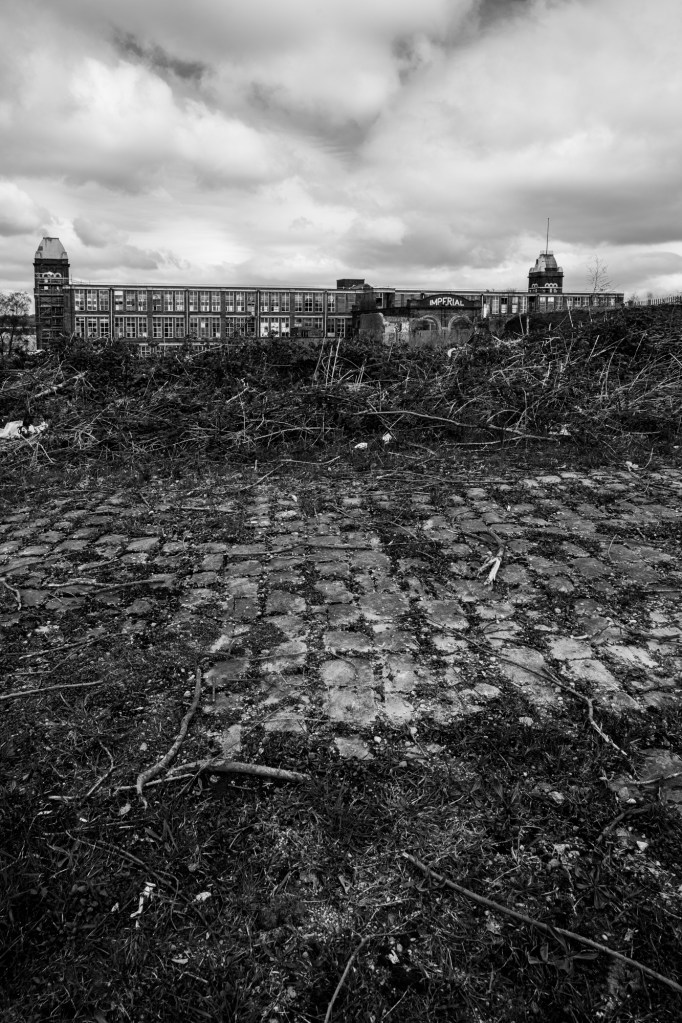
Until recently it wasn’t possible to view the mill from this perspective as Hole House Mill stood here until a few years ago. This was cleared to make way for the new Carl Fogarty Way which takes traffic from the Whitebirk roundabout M65 junction to the main road into Blackburn, bypassing the old road but thanks to the inclusion of a roundabout and traffic lights is probably about a minute slower. But hey, new road and all that.
Hole House Mill was a typical collection of single storey weaving sheds of which there were many in Blackburn, and it backed onto the canal. I think it was last used by a metal pressing company who made things like fuel tanks for Transits, but I never photographed it as I don’t find these big featureless sheds easy or interesting to photograph. But it’s clearance has opened up views of Imperial Mill that never existed before (Hole House Mill predated Imperial by a good few years).
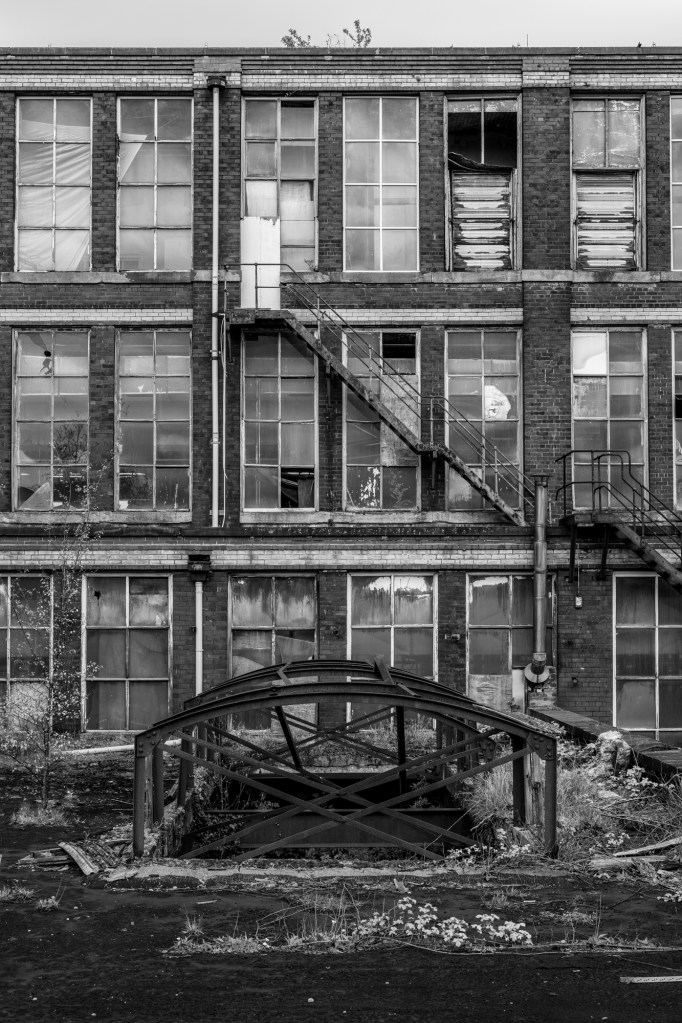
There are plans to demolish some of the ‘structurally unsafe’ parts of the building such as the Boiler House (which I’m pretty sure is the structure at the bottom of the photograph above and below) Engine Room Extension, Masonry Annex and a ‘Steel Structure’.

As I looked at these photographs and compared them with the ones I took in 2004 and 2006, I realised that while the mill wasn’t in great condition in 2004 (24 years since Courtaulds closed it), a further 20 years had since elapsed and a small company just doesn’t have the budget for the upkeep of a huge, old building like this. In fact nearly as much time has elapsed since the mill closed and I took my initial photos (24 years) as has elapsed between my first and last visit (20 years). Tempus Fugit.
I’m not entirely clear what the redevelopment will actually be for, the council are saying that it will be ‘restoring and repurposing it as a job-creating hub for creative industries and cultural activities’ which is a somewhat nebulous term and short on specifics. The illustration below that accompanies all related online articles gives no clues either although the rooftop greenhouse looks like an interesting addition, but as the mill is listed it probably won’t get through the planning process.

I wish them the very best as mills tend to be enormously expensive to refurbish, which is probably why they end up burning down or being demolished unless they’re in a decent area of a town and they can sell enough apartments to break even. But when done well, like Brierfield Mill, they can really make a difference to an area.
Postscript: a couple of weeks after photographing the mill and writing this post, I read this on the BBC website, which echoes my thoughts above.
 Mechanical Landscapes