Tag: Lancashire
-
#452 – Rossendale Mills – The Lancashire Sock Company
Not too long ago, there were many little mills, bleachers and dyers in the valleys of northern England. The past 20 years has seen them disappear or redeveloped into apartments, as property prices increase and gentrified semi-rural living has become more popular. The valleys of Rossendale though are strangely untouched in this regard, with many…
-
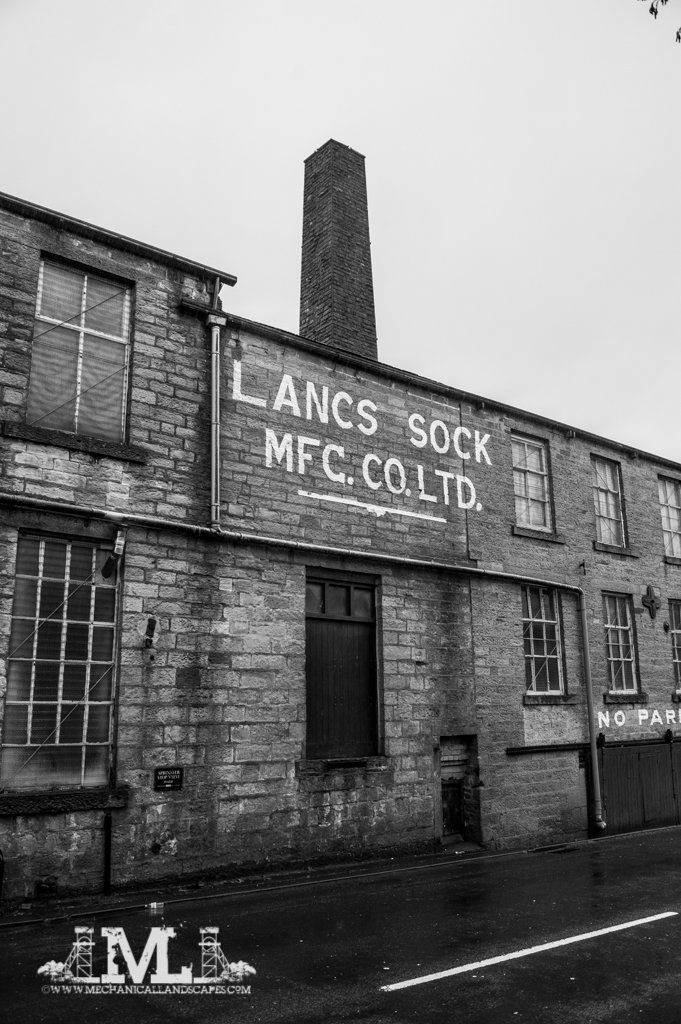
#451 – Rossendale Mills – The Lancashire Sock Company
I was comforted to discover that a company called The Lancashire Sock Manufacturing Company exist in a mill in Bacup. I’m not saying this in a patronising, sneering kind of way – I’m always pleased to discover traditional, long established manufacturing companies in old mills. There’s also the no-nonsense ‘does what it says on the tin’…
-
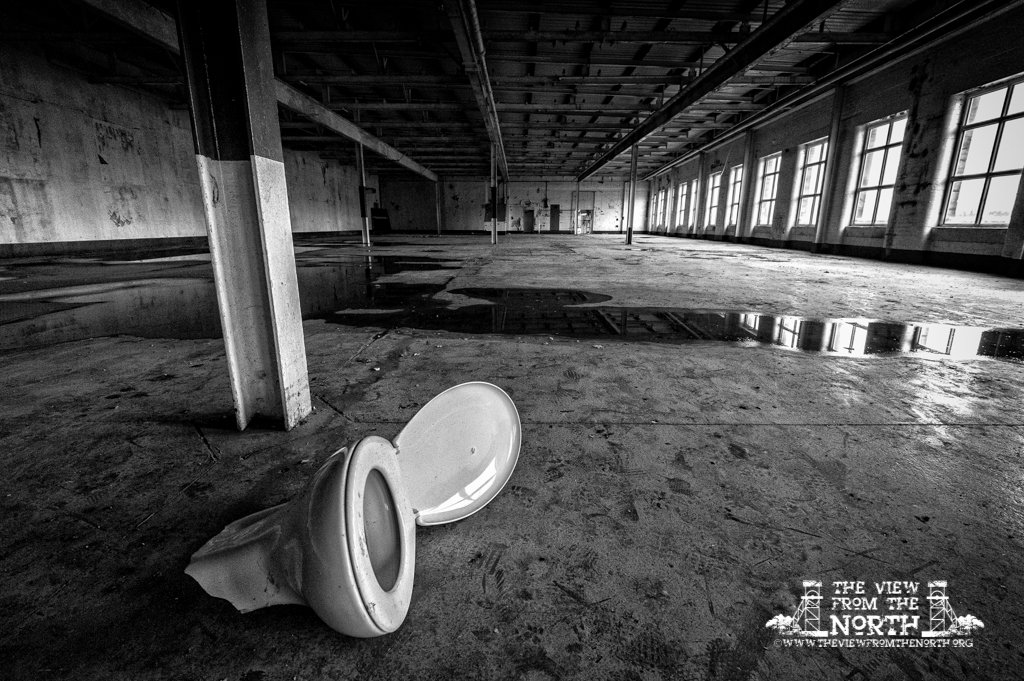
#441 – Brierfield Mill Part 8 – The Shopfloor
I’ve saved the shopfloor to last as, well, there wasn’t much of interest to shoot. 380000 square feet of basically f*** all and pigeons. The mill had been methodically stripped of everything. But as a photographer, that’s fine as it forces me to look beyond the empty space and try harder to see things. It…
-
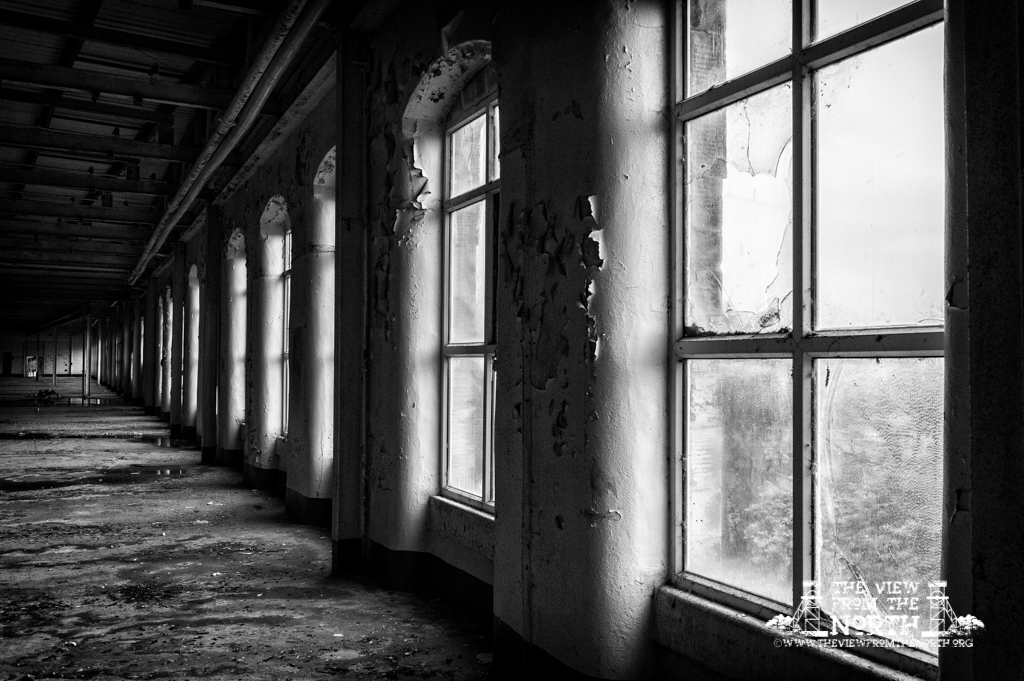
#440 – Brierfield Mill Part 7 – Doors and (more) Windows
Like all big mills, Brierfield has lots of windows. Hundreds of them. So here’s a few more, plus a door. Weaving shed floor. This was a more modern portal framed building roof built onto an older weaving shed, giving the place substantially more volume. This wall runs alongside the Leeds Liverpool Canal affording some lovely…
-
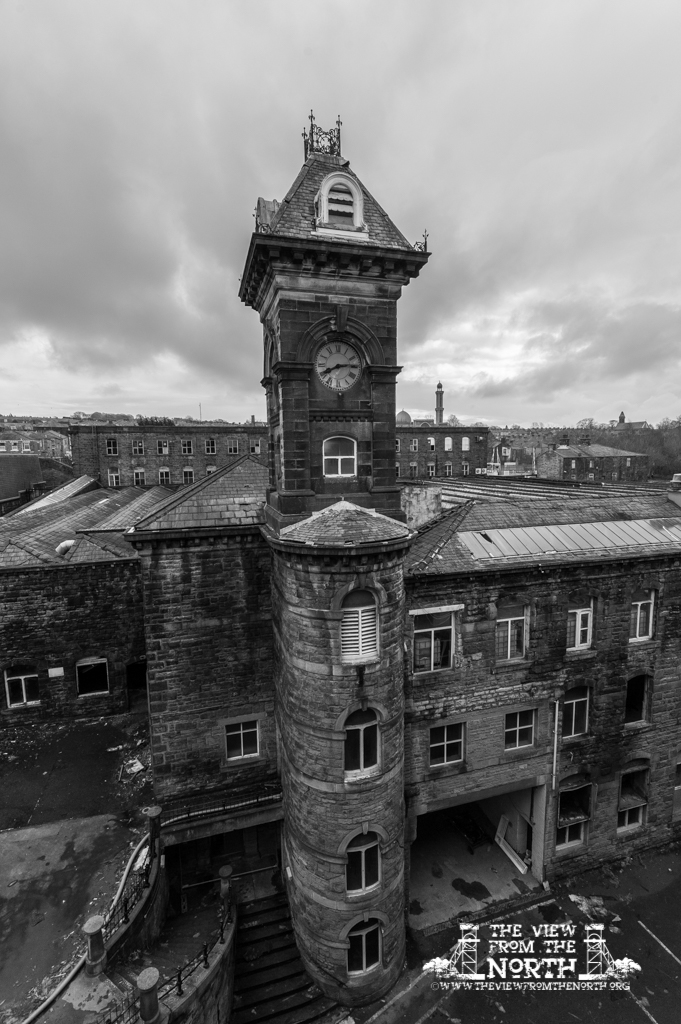
#439 – Brierfield Mill Part 6 – The Clock Tower
The clock tower is an interesting focal point from a photographic perspective. However on closer inspection it doesn’t look quite right. Site Supervisor Paul worked in the mill for a large part of his career and is of the opinion that not only is it a somewhat later addition, but that the design was actually…
-

#438 – Brierfield Mill Part 5 – The Clock
One of the most interesting (and inaccessible) remains in the mill is the clock. It is electro-mechanical (electricity winds it up, effectively) and a lovely thing to behold. And to top things it off, it rings a large bell, which was inaccessible to a large fellow like myself. Carved into the wood supports for the…
-
#437 – Brierfield Mill Part 4 – Reception
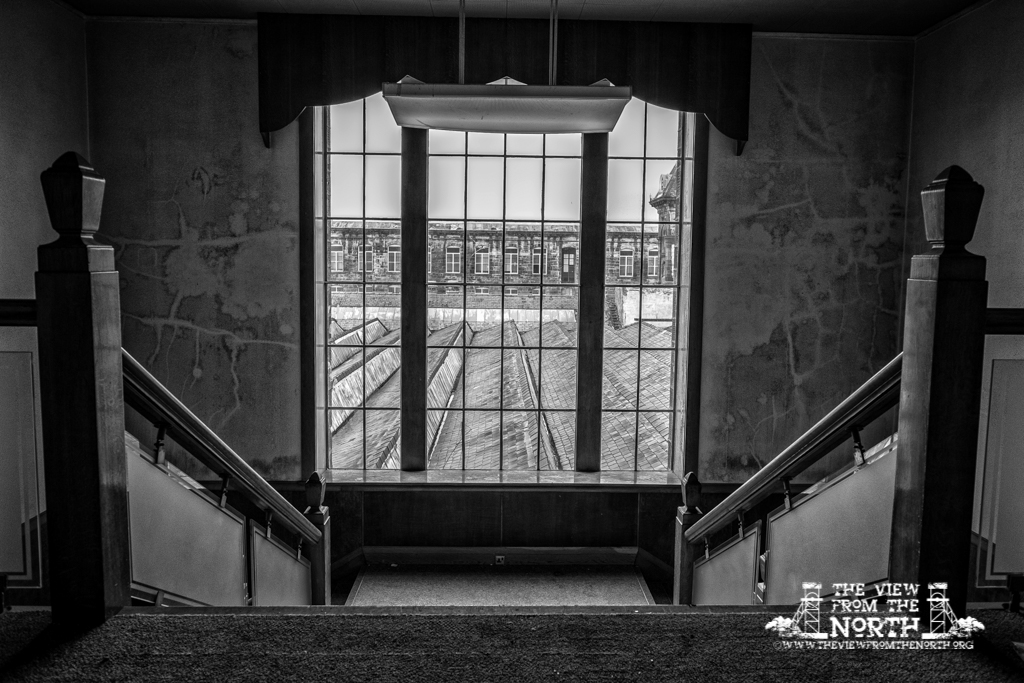
The timber lined reception had been untouched by the demolition crew that had cleared out the admin building (the entire site is listed so no buildings are getting pulled down). It’s symmetry appealed to me so I made the most of it. Unfortunately all the offices had been stripped and the internal walls reduced to…
-
#436 – Brierfield Mill Part 3 – North Light Windows
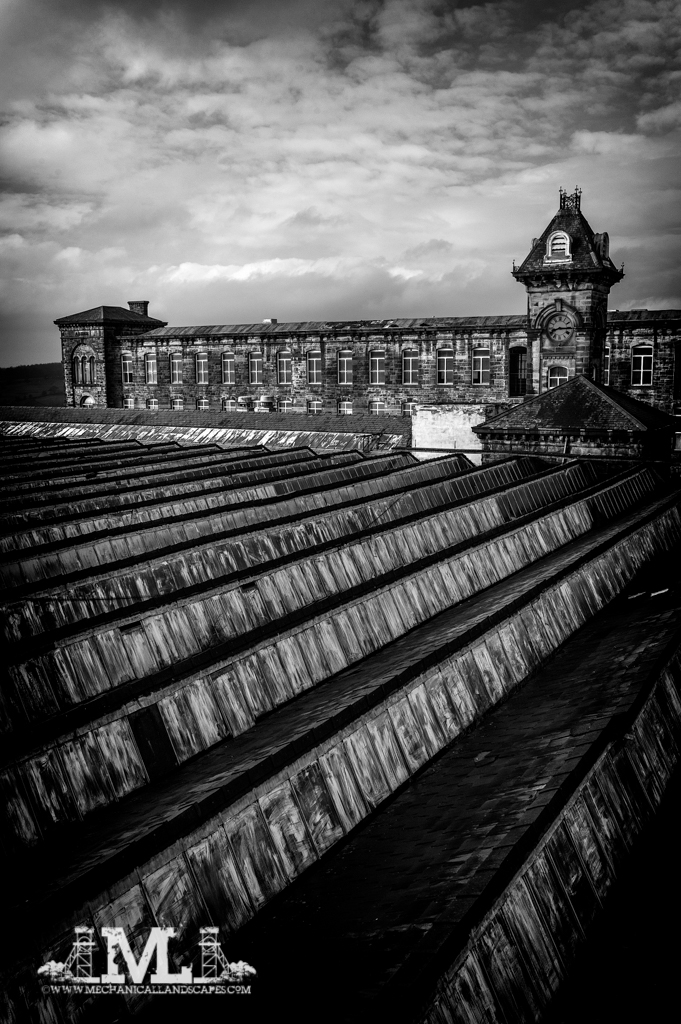
If you’ve seen my recent blog posts on the Rossendale mills, then this will look quite reminiscent of some of those. I’m not sure why I’ve developed a fascination for northlight windows, it’s probably just a passing whimsy, but in the right light they can look great. Unfortunately the winter sun was well off to…
-
#435 – Brierfield Mill Part 2 – Views Through a Window
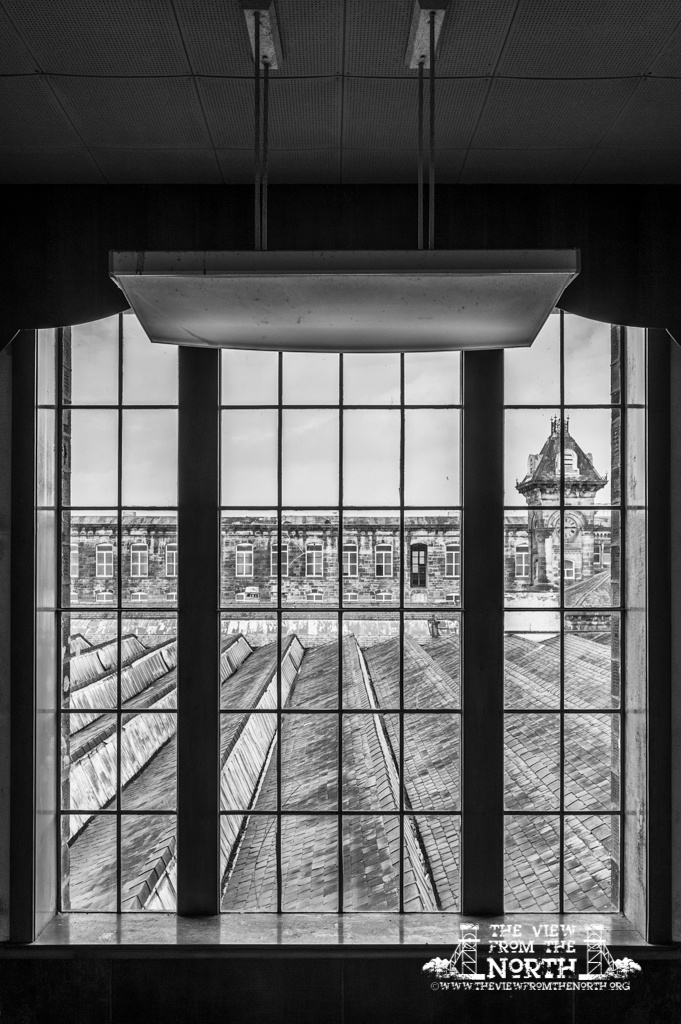
Windows. This composition is something I’ve used successfully over the years and is one I still employ. I’m sure if a psychoanalyst saw them all he would interpret them as the sign of a troubled mind, but it’s just a composition I happen to like. I wanted to find ways of including the clock tower…
-
#434 – Brierfield Mill Part 1 – An Introduction
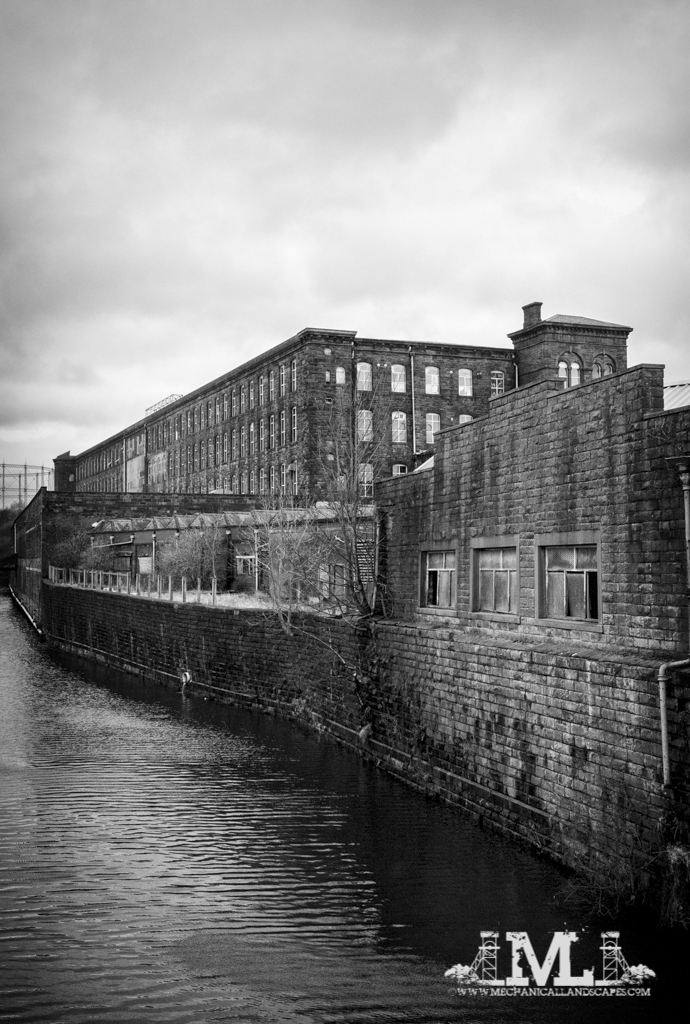
The M65 motorway was opened in sections between 1981 and 1988, and formed a link between Blackburn and Burnley, two old mill towns in terminal decline. So much so that it was nicknamed ‘the motorway from nowhere, to nowhere’. Maybe the planners simply had their map upside down, but the rest of the motorway i.e.…
-
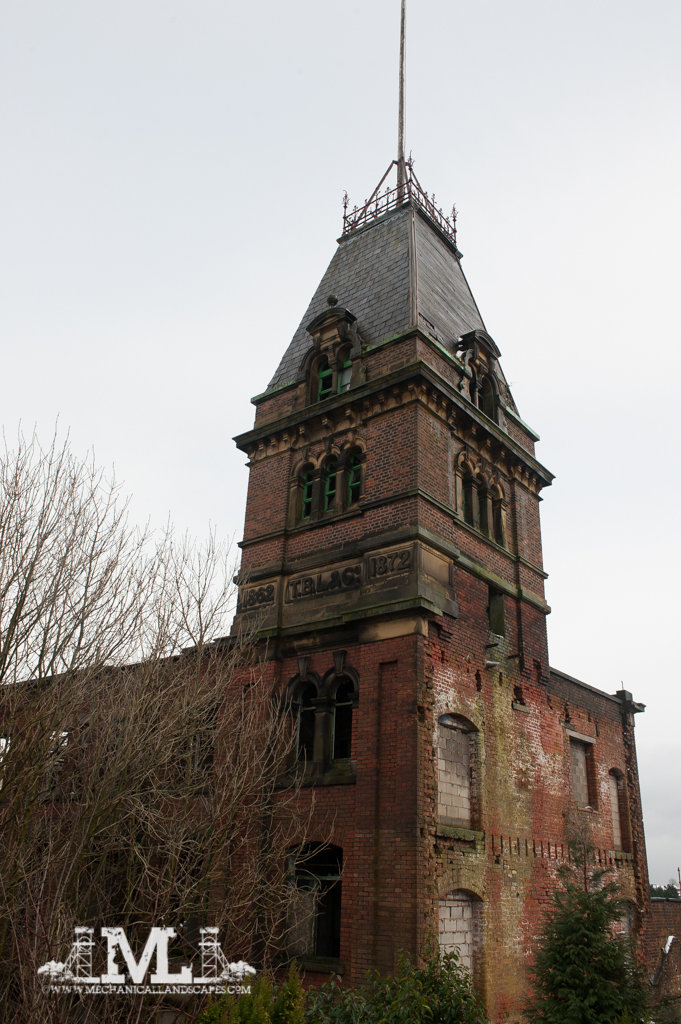
#433 – The last days of Sunnyside Mills, Bolton
I happened on this article last week and decided to take some time to get a few photographs of this landmark mill tower before it disappeared. I got there just in time. Demolition contractors were on site and much of the rest of the mill had already gone. It’s a difficult place to photograph as…
-
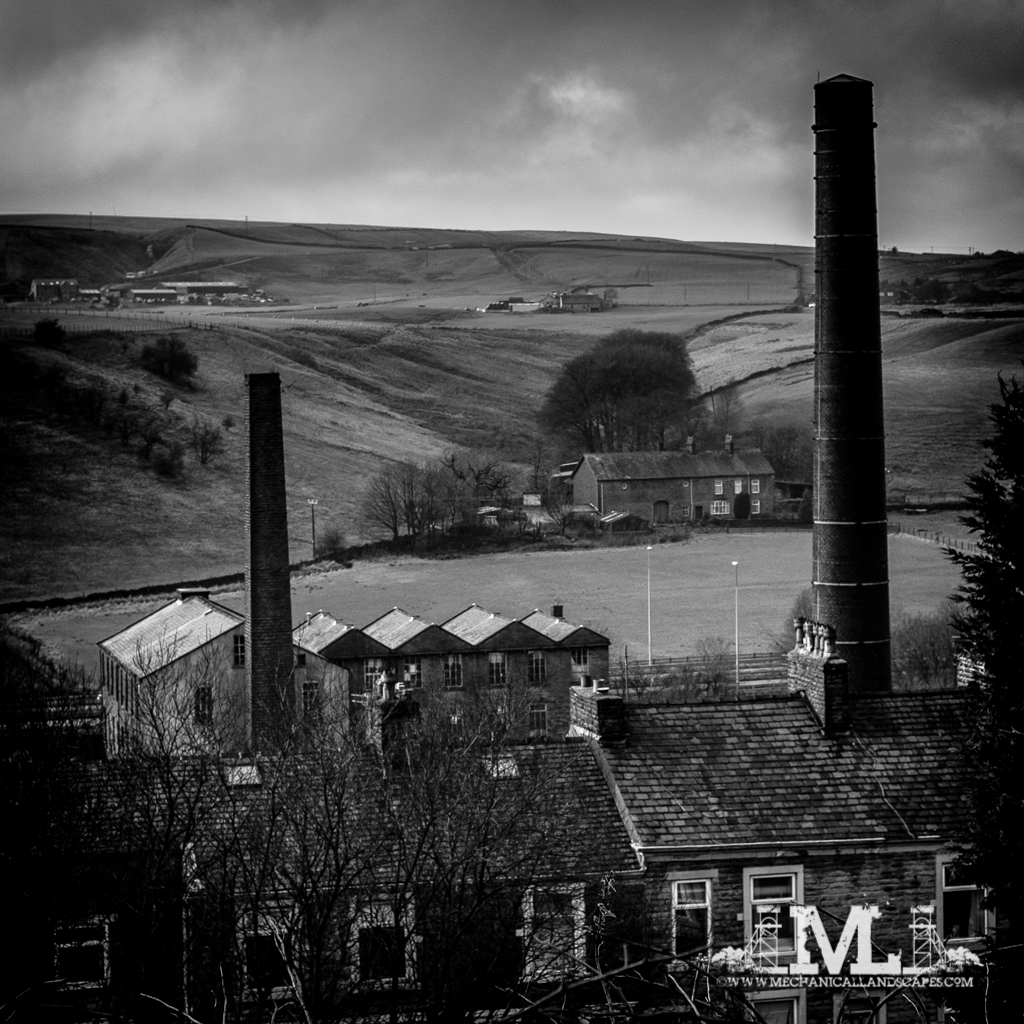
#432 – Rossendale Mills – Albert Mill, Haslingden 5
I mentioned in my previous post about the east Lancashire mill towns being located in valleys or on hillsides. In some respects, it’s similar to the coal mines in the Welsh valleys – although in this instance it is geography rather than geology that dictated this. The textile industries initial growth was powered by water…
-
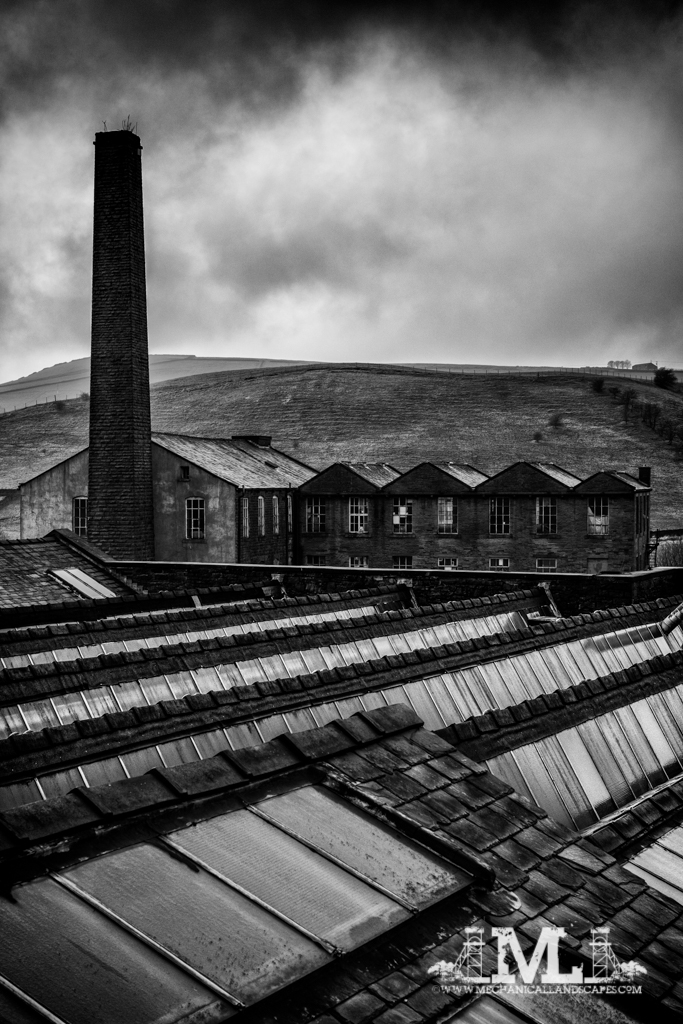
#431 – Rossendale Mills – Albert Mill, Haslingden 4
A slightly different perspective to the first one I posted in this series, but all 4 were taken within 20 feet of each other on the same stretch of pavement, albeit using either a 14mm, 18mm or a 35mm lens on my Fuji XT-10. It perhaps needs a little more ‘breathing space’ on either side…
-
#430 – Rossendale Mills – Albert Mill, Haslingden 3
Saw tooth north light roofs are ubiquitous on textile mill weaving sheds, and can sometimes be found atop the multi storey spinning mills as well. It’s unusual to be able to look down on one from the ground though, but the local topography was on my side here. I’ve never really had the chance to…
-
#428 – Rossendale Mills – Albert Mill, Haslingden 2
Haslingden. Someone once told me that there are only two types of weather in the East Lancashire town of Darwen – rain, or about to rain. In fairness, this is true of most of the East Lancashire mill towns, stuck in their little valleys or clung to hillsides. From a monochrome photographers perspective this is…
-
#427 – Rossendale Mills – Albert Mill, Haslingden 1
Going east from the sun-drenched lowlands of Chorley where I reside, the landscape starts to quickly get hilly, and within the many valleys of the West Pennine Moors are numerous former mill towns. Haslingden is one although there aren’t many mills left here. Albert Mill and its characteristic north light windows are almost a landscape…
-
#416 – Blackburn Gas Holder
A few years ago I spent some time living in Blackburn, and my house was a mile or so away from this huge gas holder. To be honest I never really noticed it. I mean, I knew it was there, but it was just part of the local landscape. I’ve no particular interest in gas…
-
#415 – Leigh Spinners Mill Engine – The Giant Awakes………..
After years of service, the giant was no longer needed. Obsolete and old, it was given a spot of oil and the blankets were put on. The giant went to sleep, resting, and maybe mourning the loss of it’s twin next door, cut up by the scrapman after a boiler explosion ripped apart it’s lungs.…
-
#386 – Mill Lodge and Chimney
There’s not many factory chimneys left in Lancashire, and very few of those are actually still used. This one at Pincroft Dyers in Adlington near Chorley is one of the few exceptions, and is one of the few remaining printers and dyers left in the area. Other than the cladding on the buildings, this scene…
-
#343 – Reworked Images 9 – Jumbles Quarry Crane
Maybe it was because I visited the quarry with someone (I seem to produce better images alone, although the venerable Tarboat was excellent company) or whether the location itself was a challenge, but I didn’t come away with many images that really inspired me. I felt they made a good record of the place but…
-
#340 – Reworked Images 6 – Jumbles Quarry
This was an image I’d scratched my head with in colour. I just couldn’t do anything with it, and I didn’t think it worked well in monochrome, so even though I liked it and thought it had potential it never really went beyond basic adjustments. I’ve always thought it an intriguing image, but one that…
 Mechanical Landscapes