Category: Industrial Photography
-
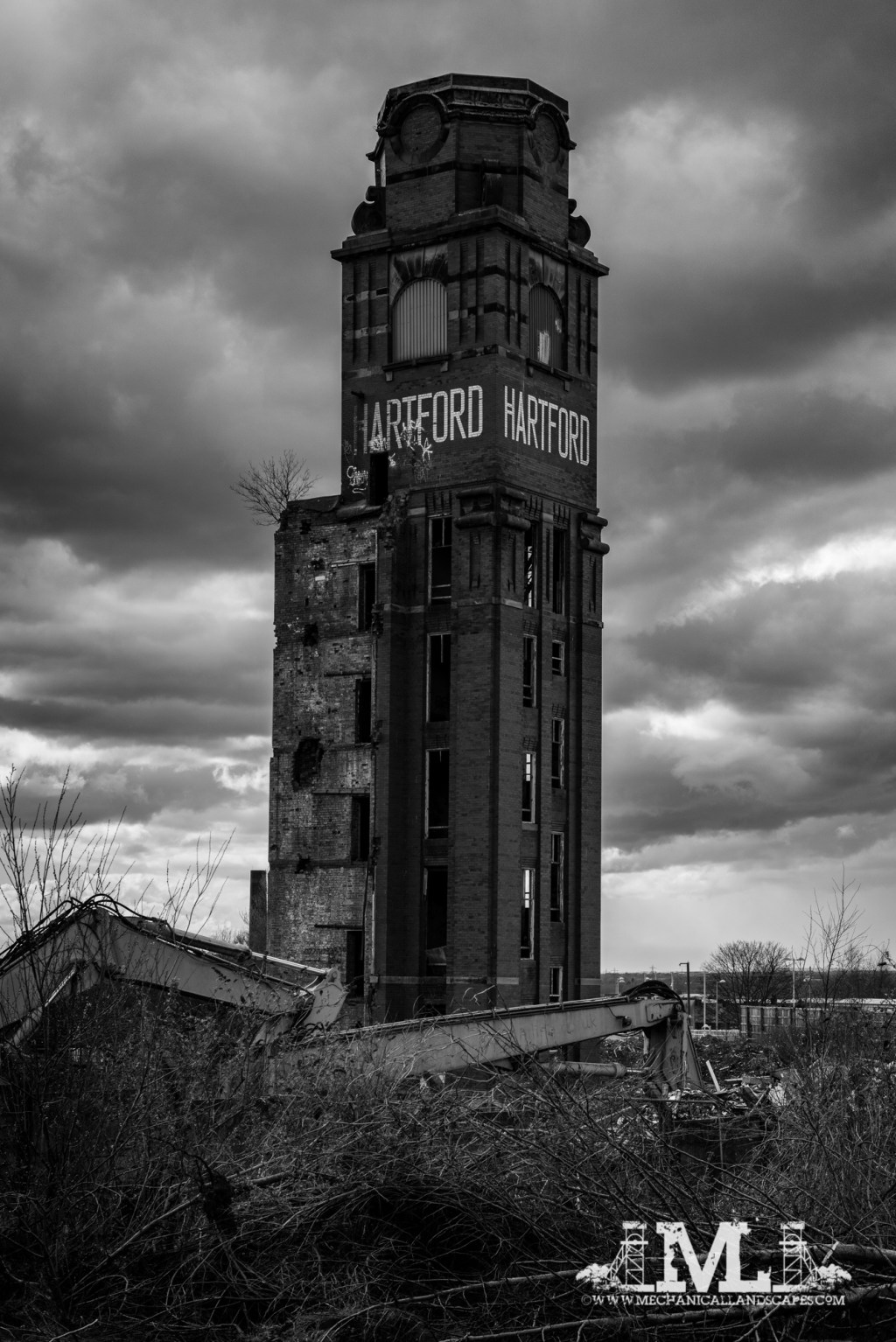
#595 – A Return to Hartford Mill 1
I thought that Hartford Mill had been erased from the landscape in the weeks after my visit in February 2020, turns out it hadn’t. A contact of mine who lives about 5 minutes away from it had posted a picture similar to the above on Flickr later on in 2020, but I assumed that demolition…
-
#594 – A Refreshed Typology
So with the photograph of one of the Snibston headstocks available for inclusion, I took the opportunity to refresh the typology and add in Grove Rake and Magpie Mine that I’d not included before. Grove Rake I took back in 2016, long before this project was conceived and so isn’t optimal really, but until I…
-
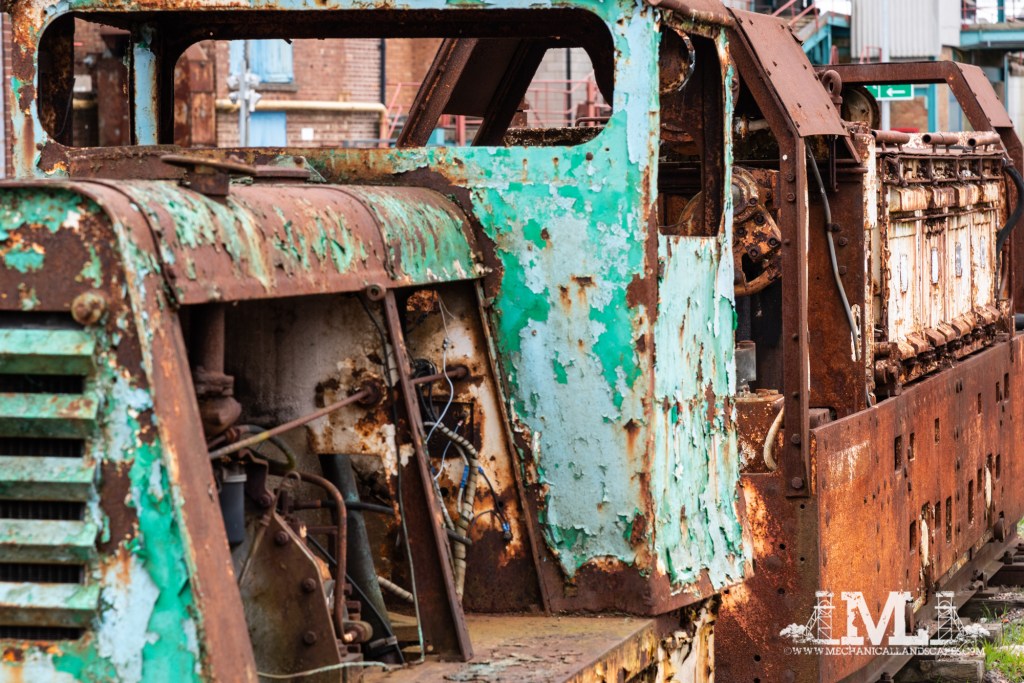
#593 – Snibston – Part 3
Nothing to see here other than some self indulgent colour photographs of rust! The museum part of the colliery site has unfortunately been demolished, but as well as the headstocks, there are a number of other mining artefacts on display in front of the tandem headstocks.
-
#592 – Snibston Mine – Part 2
The reason I visited Snibston was to see if I could make some photographs for my ongoing typology project. As I mentioned in my previous post, I feared that as the site had closed, I would either have to jump a fence or shoot from the road. However, the site reopened in 2020, thus eliminating…
-
#591 – Snibston Mine – Part 1
My only previous visit to Snibston was in 2010 (here and here), I can’t recall the occasion but it was a rather nice setup, with the site of the colliery being nicely preserved with a modern museum and short heritage railway line featuring diesel and steam shunters hauling the ubiquitous BR Mk1 coach. It was…
-
#590 – New Zine published and on sale now!
Wrecked on the beach is my first zine, and is based on my ongoing wrecks project. OK, so ‘wrecks’ is a bit of a leap of the imagination, it’s more beached and derelict ships that I’ve photographed across the UK and abroad, but hey, let’s not split hairs eh? It’s 32 pages with a colour…
-

#589 – Brierfield Mill revisited – Etchings
I was revisiting my photographs that I took at Brierfield Mill in 2016 for a potential image sale, and I came across these that I took. I’d ‘starred’ them in my Lightroom catalog but had never processed them so, five years on, I thought it was about time. I’m told that although they were removed…
-
#587 – Steeltown Landscapes 2
Unlike the sprawling, overwhelmingly oppressive landscape of the steelworks at Scunthorpe with its acres of cooling towers, blast furnaces, coke ovens, conveyers and other artefacts of industry, the visual landscape of the Aldwarke steelworks in Rotherham is more generically industrial. Like Scunthorpe, it’s not easy to photograph from directly outside, you have to go on…
-
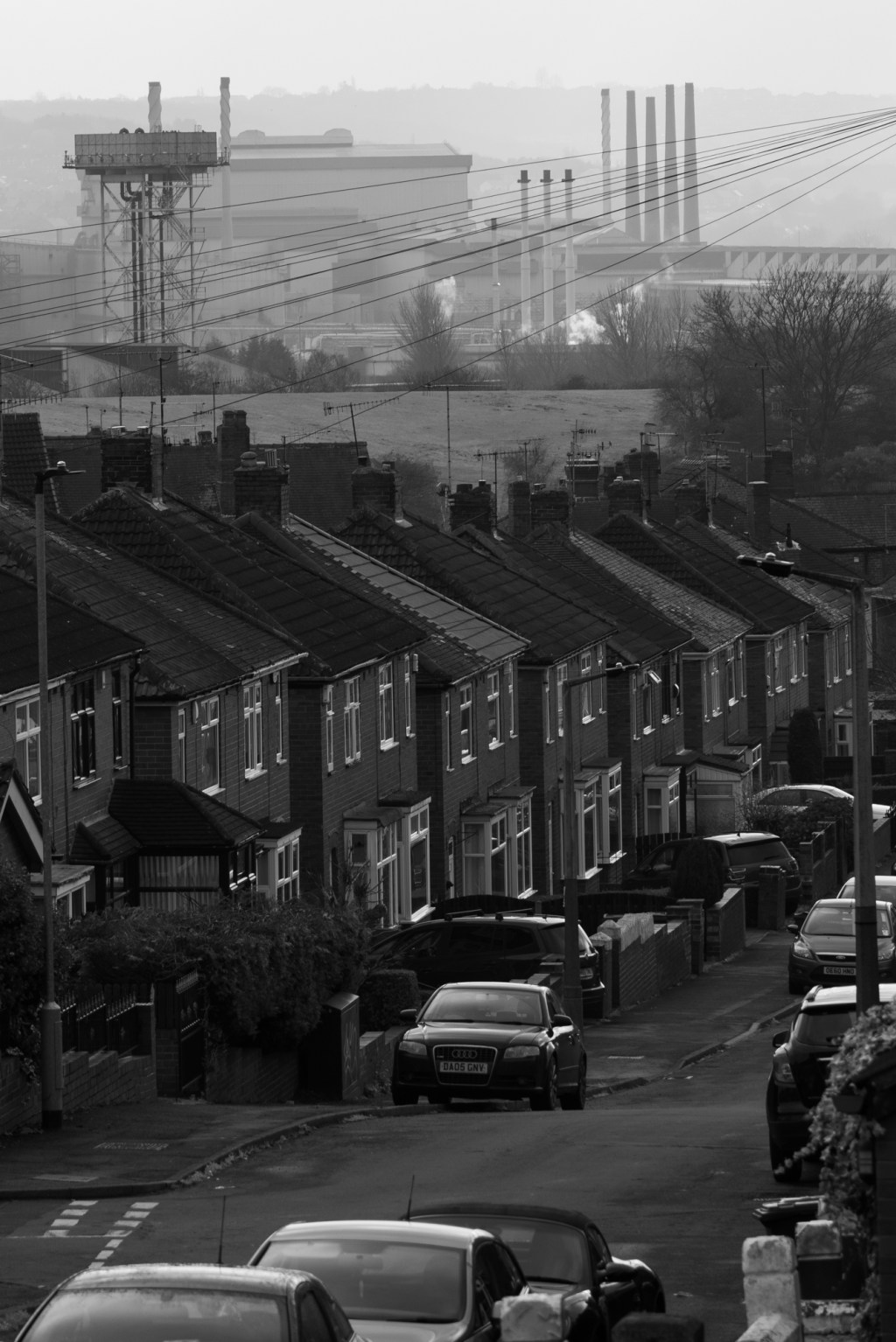
#586 – Steeltown Landscapes 1
I posted a few photos a while back of Rotherham, a South Yorkshire steel town and neighbour to its more celebrated neighbour Sheffield. Britain once had many steel towns but there are relatively few now. The steel industry in Britain was once enormous and employed hundreds of thousands of people, and the economies of many…
-
#585 – Industrial Tourism – Scunthorpe 6
Since my last visit, two major buildings had come down – the Heavy Section Mill (which was disused when I visited in 2008) and the Plate Mill (which was in use until 2015 and demolished not long after). The site of the Plate Mill is now empty or used as hard standing for container storage.…
-

#584 – Industrial Tourism – Scunthorpe 5
To the South East of the site are the enormous rolling mills and the almost as big Basic Oxygen Steelmaking (BOS) plant. The rolling mills are nearly a mile long, and while the BOS plant isn’t as long, it is rather tall, and is said to be 4 metres higher than St. Paul’s Cathedral (which…
-
#583 – Industrial Tourism – Scunthorpe 4
The blast furnaces are the beating heart of the steelworks, providing iron that is converted to steel elsewhere on site. The four blast furnaces – AKA the four queens Victoria, Anne, Mary and Bess – are not all in operation currently due to a recent drop in demand but are the most visual representation of…
-
#582 – Industrial Tourism – Scunthorpe 3
Not only is it the enormity of the site that can be hard to get your head round, the enormous complexity of what is passing before your eyes can be confusing also. Beyond the basics of iron making, I’ve very little clue as to what else goes on so have no idea what these miles…
-
#581 – Industrial Tourism – Scunthorpe 2
One of the key ingredients required for iron making is coke. Huge quantities are required and a constant supply is made on site at the coke ovens. The site has two coking plants (Appleby and Dawes Lane), but only the Appleby plant – the oldest, ironically – is used now. The pungent smells and ancient…
-
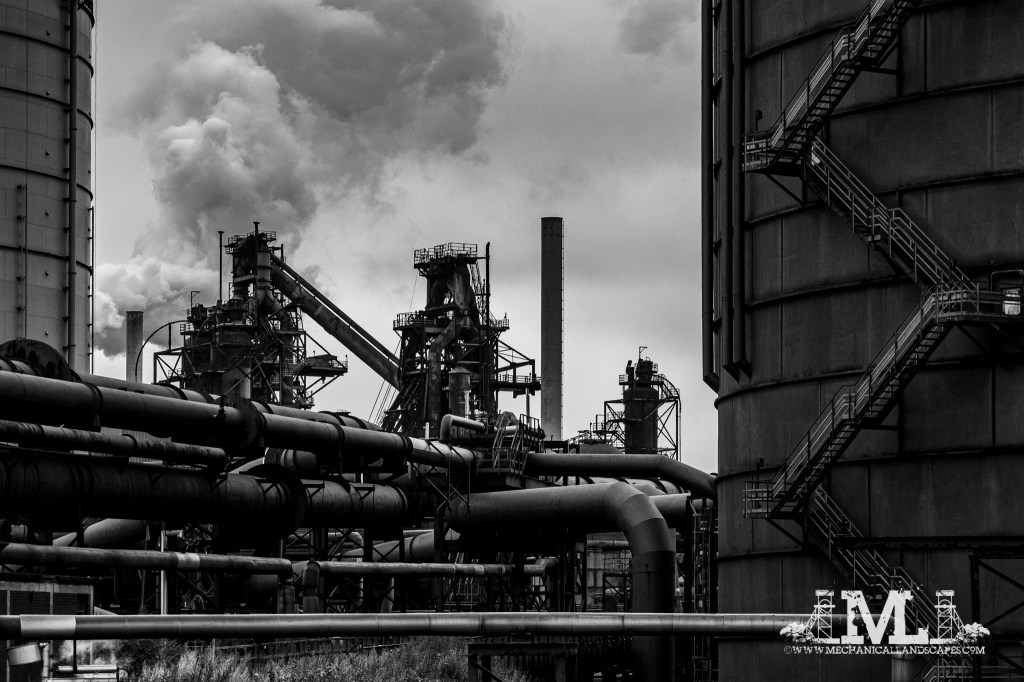
#580 – Industrial Tourism – Scunthorpe 1
An old drinking buddy of mine in Bolton was enormously clever and was sponsored through his chemistry degree by British Steel, as it was still called in the mid-1990’s. After inevitably getting a first, he decided not to take a job with them as he “didn’t want to spend his life in a steel works…
-
#579 – Steeltown Panorama – Scunthorpe
After visiting Rotherham, I headed for Scunthorpe, as I’d booked to go on a train ride round the steelworks with the Appleby and Frodingham Railway Preservation Society. The society are based on the steelworks site and run brake van tours of the steelworks railway system, but more about that in upcoming posts. Before I went…
-
#578 – Steeltown Panorama – Rotherham
I’d seen similar photographs to this a few times over the past rather, mainly when Rotherham hit the headlines for the child grooming gangs operating in the town. Now I don’t want to get into that side of the story (and any comments posted about it will be deleted), but the photograph itself was an…
-

#577 – Florence Mine 2
Ironstone mining was once quite widespread in Cumbria and helped feed the blast furnaces of the iron and steelworks of the county. Both the mines and the steelworks have now all gone, but up until the late 1960’s there were significant steelworks at Barrow, Workington and Millom. These all gradually stopped steel production and closed,…
-
#576 – Florence Mine 1
Florence mine is just a few miles away from Haig Colliery, so as I was in the area (and West Cumbria is not somewhere I visit regularly) it struck me as being worth a look. Unlike the rest of the mines on my recent mining binge, Florence was an ironstone (haematite) mine rather than coal.…
-
#575 – Haig Pit 2
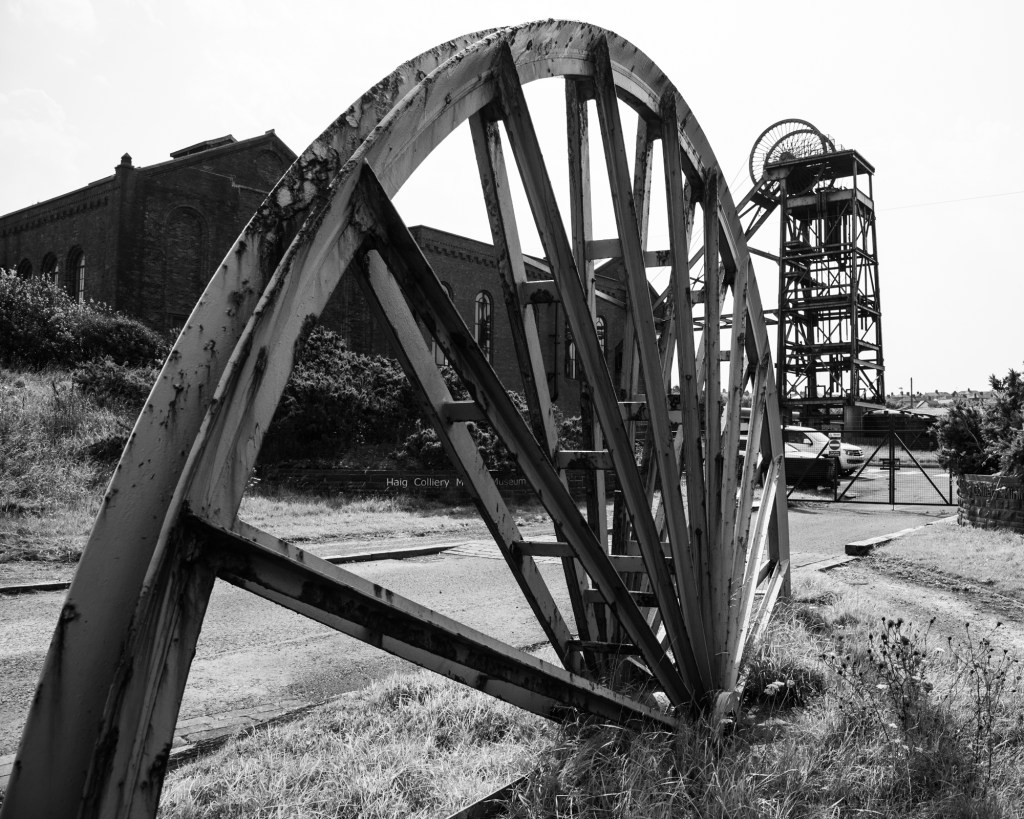
Haig colliery sits on a cliff above the town and looks out to sea. While I couldn’t capture it relative to the town, I did manage to photograph this scene showing the coastline and the cliffs that fall steeply to the sea. This land between the cliff and colliery was previously home to the railway…
-
#573 – Haig Pit 1
Cumbria in the 21st century is a place we most associate with the Lake District. It’s rugged beauty brings millions of visitors every year, but as you head west through the county, you hit the little visited industrial coastline. There’s not that much there now except Sellafield and a few old industrial towns, but for…

