Category: Industrial Landscape
-
#427 – Rossendale Mills – Albert Mill, Haslingden 1
Going east from the sun-drenched lowlands of Chorley where I reside, the landscape starts to quickly get hilly, and within the many valleys of the West Pennine Moors are numerous former mill towns. Haslingden is one although there aren’t many mills left here. Albert Mill and its characteristic north light windows are almost a landscape…
-
#426 – Library of Congress Images – Steel Mill Panoramas
I’ve never worked in the steel industry but I’ve visited the steelworks at Redcar and Scunthorpe and it’s an industry that, as a photographer, continues to fascinate me. The sights, smells and sheer physical size and complexity of the plants are rivaled only by oil refineries. The American steel industry, like the British one is…
-
#425 – Library of Congress Images – the night photography of Jack Delano
I’ve featured quite a few of Jack Delano’s Library of Congress photographs on this blog over the last 18 months or so. Maybe it’s because he photographed subjects that I am interested in, but his photographs stand out for some reason. While some of the portraits of the railway workers on the Santa Fe and…
-
#422 – Rhydymwyn Valley Works, aka The Mustard Gas Factory, Part 3
The Atom Bomb Connection Rhydymwyn was used to house gaseous diffusion machines with the objective of separating the uranium isotope U-235 from U-238 as this was thought to be the quickest way of producing enough material for an atom bomb. The site was chosen for a number of reasons – there were empty buildings of the right size, it…
-
#421 – Rhydymwyn Valley Works, aka The Mustard Gas Factory, Part 2
This pencil graffiti has lasted surprisingly well considering it is supposedly 70 years old…… Being a regular visitor to both derelict and active industrial sites, I’ve walked across all kinds of surfaces, but never a rubberised one. The site roads on the southern section were coated with a rubber like asphalt designed to stop…
-
#420 – Rhydymwyn Valley Works, aka The Mustard Gas Factory, Part 1
The landscape of Britain continues to be littered with the remains of past conflicts. From the Napoleonic era forts of the channel, through to the likes of Chatham dockyard and old ordnance factories, pill boxes and ammunition dumps – you don’t have to look that hard to find something. I’d previously visited the remains of…
-
#419 – Leigh Spinners
Sometimes, you just see a photograph materialise in front of your eye – the light meets the composition and you are in just the right place at the right time. You stop and just bring your camera to your eye and thankfully you have just the right lens on your camera (I tend to use…
-
#416 – Blackburn Gas Holder
A few years ago I spent some time living in Blackburn, and my house was a mile or so away from this huge gas holder. To be honest I never really noticed it. I mean, I knew it was there, but it was just part of the local landscape. I’ve no particular interest in gas…
-
#413 – Pullman Car Works
This gigantic place was the centre of the Pullman Palace Car empire. Quite literally – the Pullman company built an entire town round the works, and called it Pullman. The town survives today, as does the Pullman brand but very little of the factory does. Google Streetview shows that just the central tower section (and…
-
#412 – Library of Congress Images – Ferris Ships, Western Marine & Salvage and the Ghost Fleet of Mallows Bay
One of the problems with the LoC archive is the erratic key wording and classification. Some pictures are done well, some poorly, some not at all. So it can be pot luck what a search comes back with, and when you are looking for something else a picture may turn up by chance that is…
-
#408 – Library of Congress Images – Cramp’s Shipyard
I’ve posted a few pictures of American naval ships and naval yards over the last year or so, so here’s a slightly different perspective on the subject. William Cramps shipbuilding yard in Philadelphia was a long established, privately owned shipbuilders that built ships for three major conflicts fought by American forces (the Civil War, World…
-
#405 – Beyer Peacock’s Gorton Foundry
The Gorton Foundry in 1947, courtesy of Britain From Above Following on from my post on Mather and Platt’s foundry, the (only?) other evidence of East Manchester’s engineering past are the boiler shops of Beyer Peacock’s Gorton Foundry. Like Mathers, the majority of the site has been demolished, but maybe the most significant part…
-
#404 – Mather and Platt’s Park Engineering Works
I’ve noted on this blog before that Manchester, the so-called first industrial city, now describes itself as a post-industrial city. It’s an accurate assessment as it’s hard to find anything of any consequence that is made in Manchester these days, beyond Cornflakes and Coronation Street. The area to the east of the city was, at…
-
#403 – Pen-yr-Orsedd Quarry Part 3
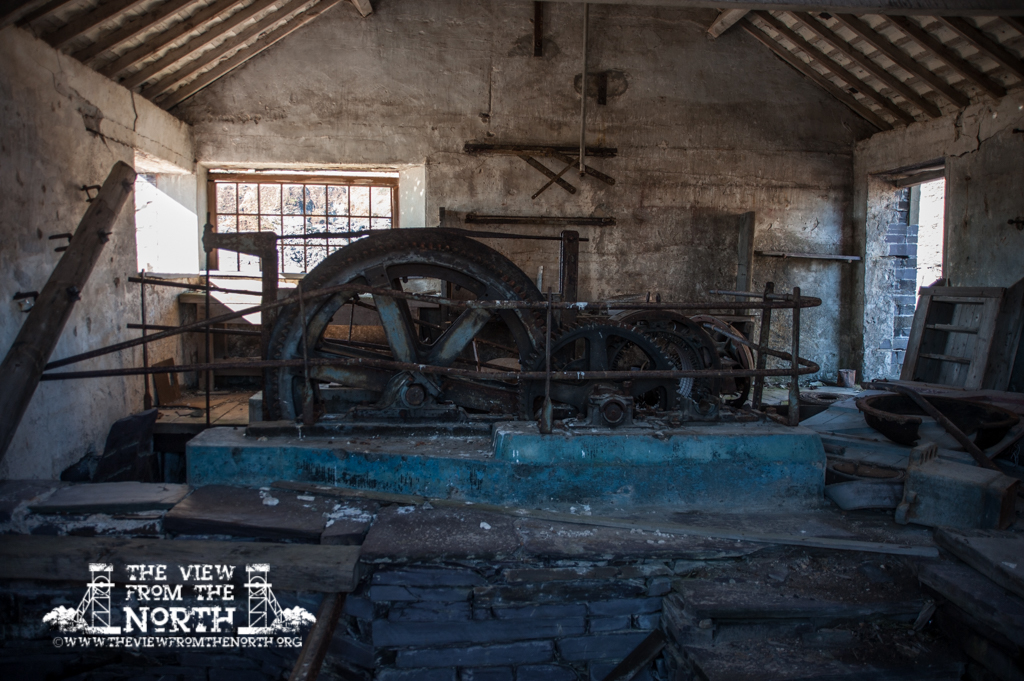
Winding engine (I think) in one of the sheds. Just a few more random ones from the visit. It was good to have some expert accompaniment on the visit, so thanks again to Iain Robinson for spending a good part of the day with me as he’s very knowledgeable on the local quarry industry and…
-
#402 – Pen-yr-Orsedd Quarry Part 2
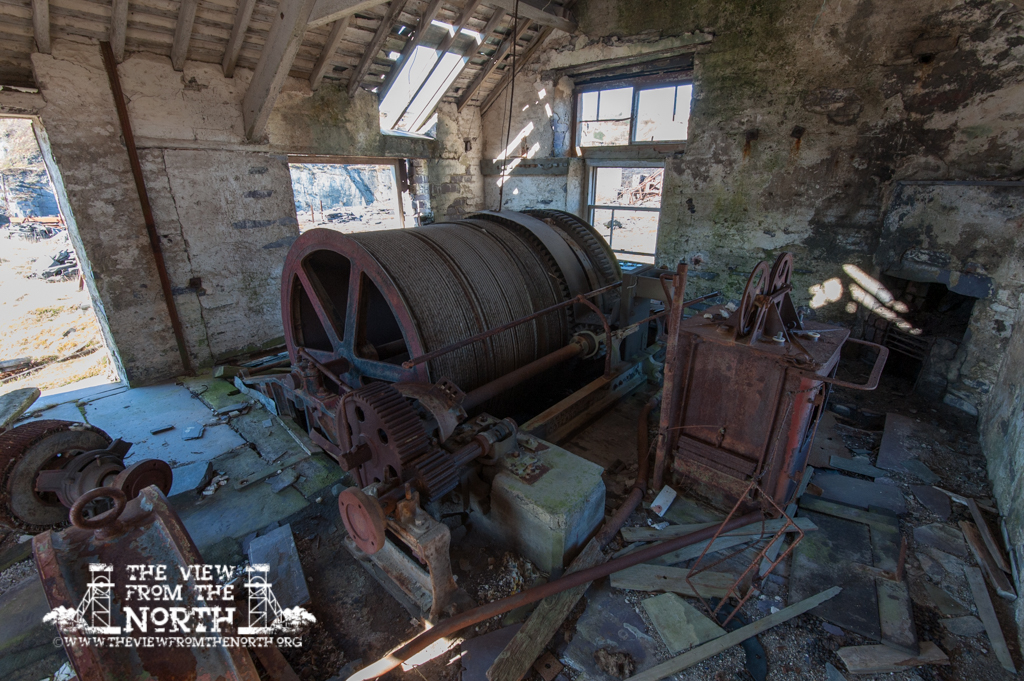
While I’m not a frequent visitor to North Wales, I have visited at least annually over the past ten years, and had experienced only one sunny day in that time. So I was pleasantly surprised to experience the area when it wasn’t smothered in cloud, fog and rain. Photographically, this represented a departure from me for two…
-
#401 – Pen-yr-Orsedd Quarry Part 1
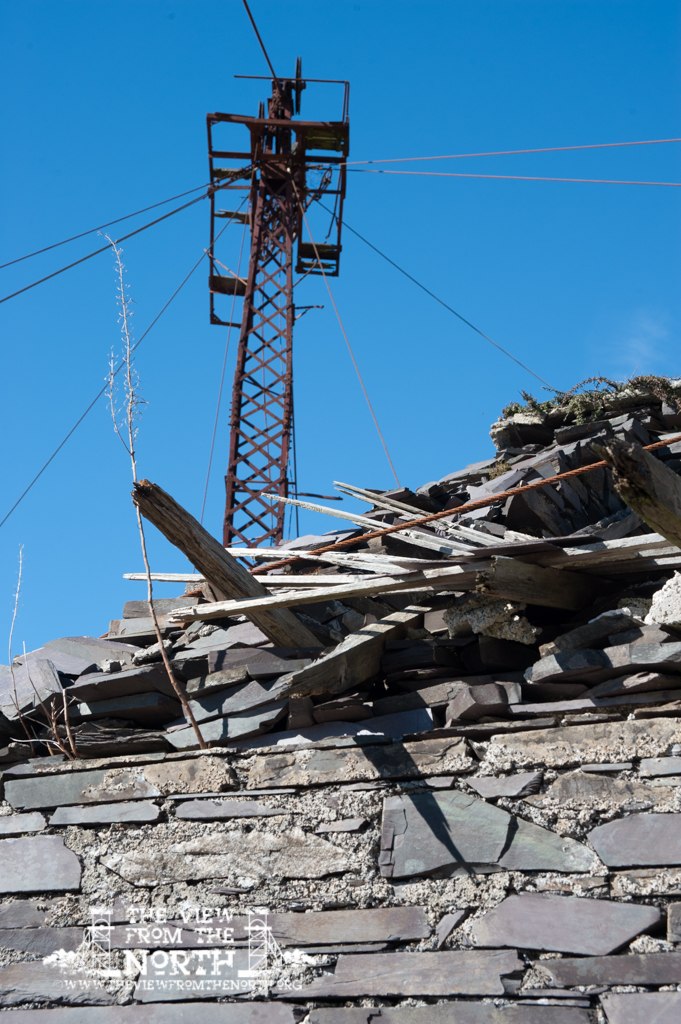
I’ve no particular association with the area or the industry, but I have an odd fascination with the slate industry and the way it has shaped the landscape of North Wales. In most industries, once a plant has worn out or is rendered obsolete for whatever reason, the place is either raised to the ground and something…
-
#400 – Library of Congress Images – SS Rotterdam at Holland America Line Terminal, Hoboken
This is a panorama created from three separate 8×10 glass plate negative scans. Needless to say, the resultant file is rather large! I recently upgraded my computer as my 6 year old PC with 4GB of RAM struggled with files like this, but the new one has significantly more processing power and Photoshop CC…
-
#394 – Photographs from Helmshore Exhibition!
Finally – a few snaps from my Shadows of the North exhibition at Helmshore Mills Textile Museum. It’s not the biggest exhibition you’ll see, and on reflection it would have been nice to have had an extra display board to space things out a bit but they only own two. I’m working on bringing it…
-
#393 – Shadows of the North Exhibition at Helmshore Textile Museum opens Monday!
The pictures have been delivered to the museum and are now on the wall, and everything is ready to go! The exhibition will run over the Lancashire half term period, and opens Monday 16th February. It is located in the room between the two mills (rather than the giant exhibiton space on the top floor…
-
#389 – Library of Congress Images – Ironton Blast Furnace
This photo is titled ‘Columbia Steel Company at Ironton, Utah a locomotive outside the blast furnace’. The Utahrails website gives an early history of the steelworks, but doesn’t explain its relatively short life of only 40 years. Despite the lack of established heavy industry in the area, Utah was home to deposits of iron ore,…
-
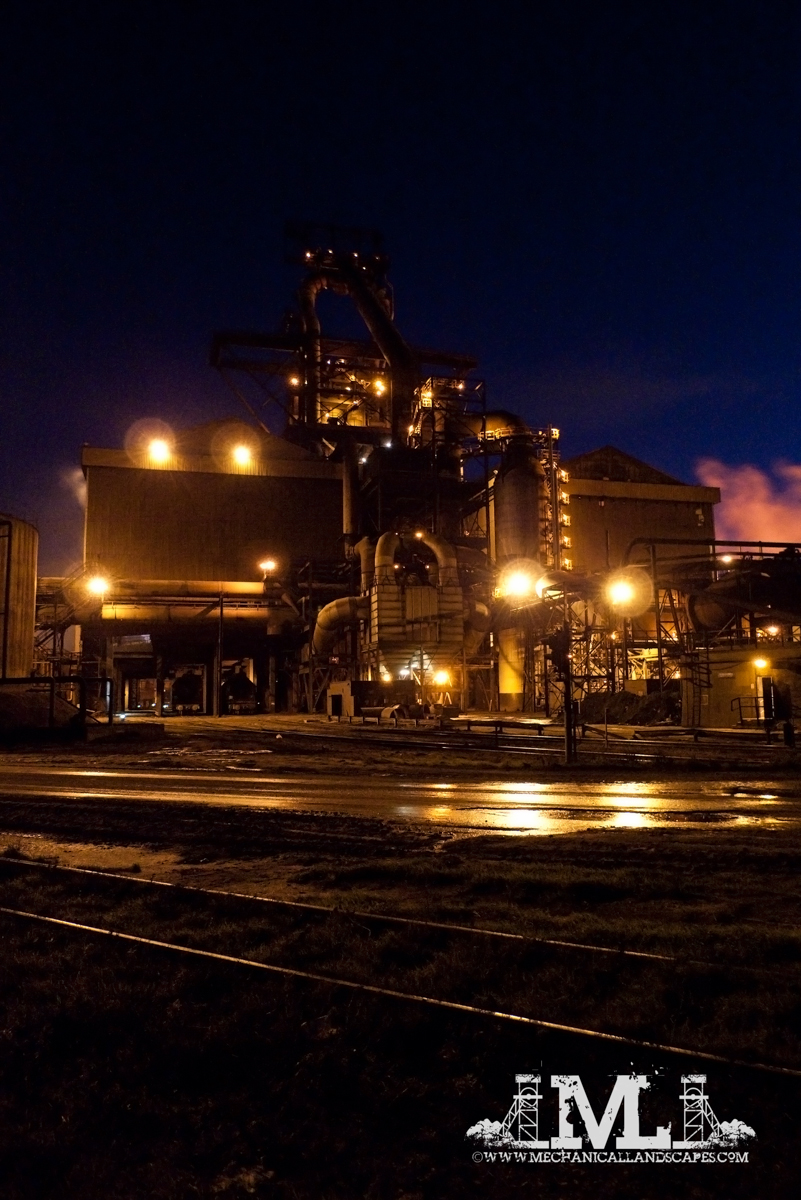
#387 – Industry by Night
I thought I’d posted these before, but it appears not. These were taken in 2010 on a cold January evening in Redcar on Teeside. The Tata steelworks was due to shutdown within the next few weeks and it looked like the end of steelmaking in the North East was imminent. The mill was shut down…

