
I wanted to take some alternative views of the mill but struggled to find a perspective I liked as not only is the mill set back from the road, it’s at an angle to it as well as below the road level. The perimeter fence did catch my eye though. It’s not something I’d normally photograph or even find interesting, but the cast iron railings that run along the main road intrigued me as it’s something that has rarely survived – many were melted down during WW2, and those that survived the war were cleared when mills were demolished. I’ve never photographed railings before and they’re not the easiest thing to photograph, but I settled on this as I think including the out of focus mill behind adds a little context.
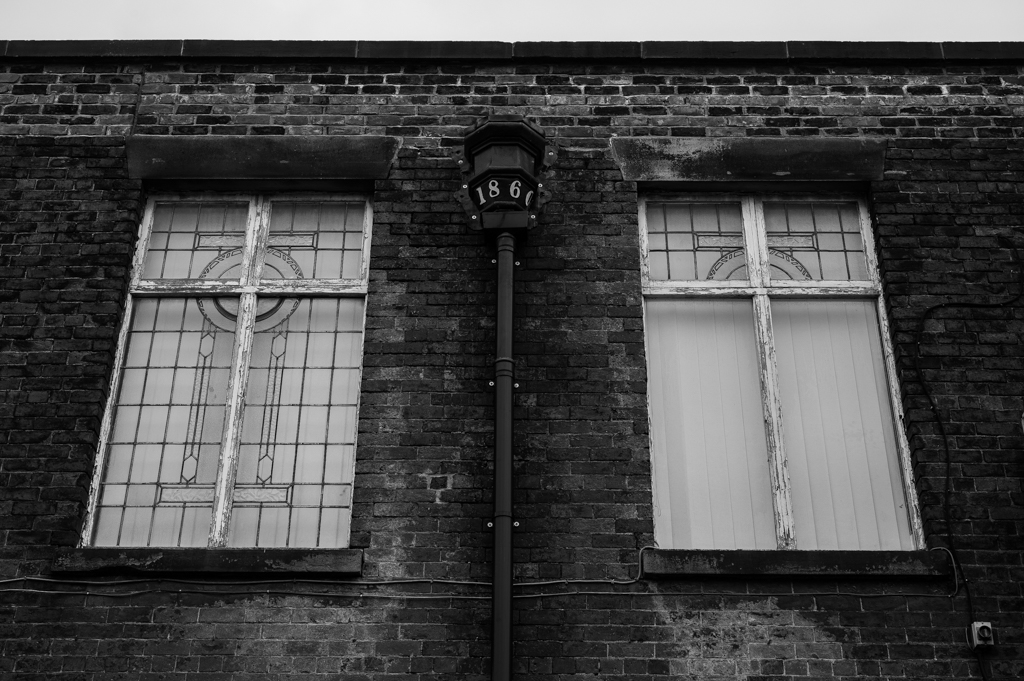
A couple of other features stood out. The office block at the entrance to the site is intact and occupied, and I noticed that some of the windows on the first floor were, if not original, then certainly rather old and at least one was still fully leaded. Note the elaborate iron guttering – the downpipe looks new (and the screws into the wall certainly were), but the hopper at the top appears to either be a refurbished original or a replica of the original 1860 item. The others on the mill were all in a more unrestored condition, but to have survived over 160 years is impressive.

Mill offices quite often had a slightly grand doorway like this, indeed, I know of at least one former mill site where only the doorway like this has survived. I don’t know how old the wooden doors are, but they’re certainly not recent. It’s a pity about all the notices in the glass, they spoil the photograph slightly but do reflect the fact that the place is still in use (albeit multiple occupation).


Leave a Reply