I’m a regular visitor to Ayrshire on the west coast of Scotland, and ever since my first visit, I’ve been intrigued by its industrial past. The cross country road from the M8 to Kilmarnock, Ayr, etc crosses a bleak, moorland landscape, pockmarked by past and current mining activities. Today, it’s exclusively opencast, but until the 1980’s there were many deep mines, and the pot-holed road, worn out by the daily onslaught of artics full of coal, winds its way through the grim former mining towns and villages that no longer serve the pits they were built for.
The Ayrshire coalfield is one that has been mined for hundreds of years, and along with coal, iron ore was also mined until the 1930’s. It was these two minerals that form the background to this unique site. Built as Dalmellington Ironworks in 1847, it worked until 1921, after which it became a brickworks, complete with Hoffman Kiln. Post war, the site was inherited by the NCB thanks to its owners being the local colliery owners, and brickmaking finally ceased sometime between 1976 and 1988, depending on which source you go off!
Like an irrepressible Phoenix, the works rose again from the ashes in the late 1990’s as the Dunaskin Heritage Centre, only to be closed in 2005, although part of the site is now used by the Ayrshire Railway Preservation Group.
It was against this backdrop that, faced with the prospect of an afternoon sitting in a Kilmarnock living room listening to my wife’s 6 month old nephew crying the house down, I excused myself for a couple of hours and made the short drive to the Doon Valley.
The Railway Group was on site, but not open to the public, so noting their presence and the palisade fence round the front of the site, in the best tradition of urbex, I went round the back. On the higher ground overlooking the works, lay a large level clearing, which was once home to a network of railway sidings, and a bit of mooching off the beaten track led me to the highest part of the site, the pug mill.
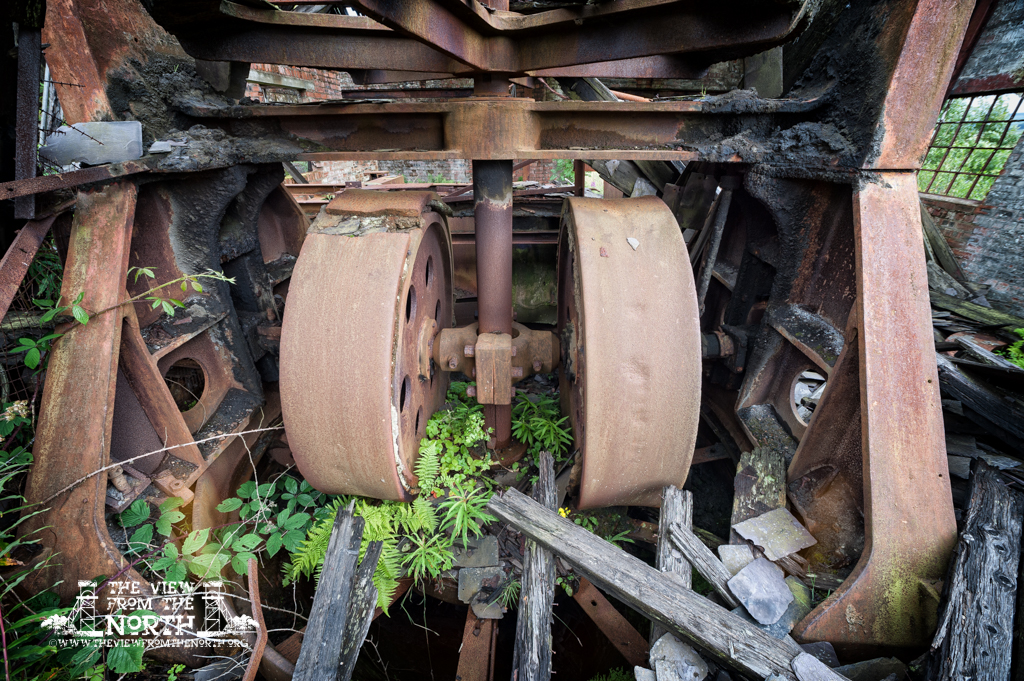
The Pug Mill from above – looks like more than 4 years of decay to me
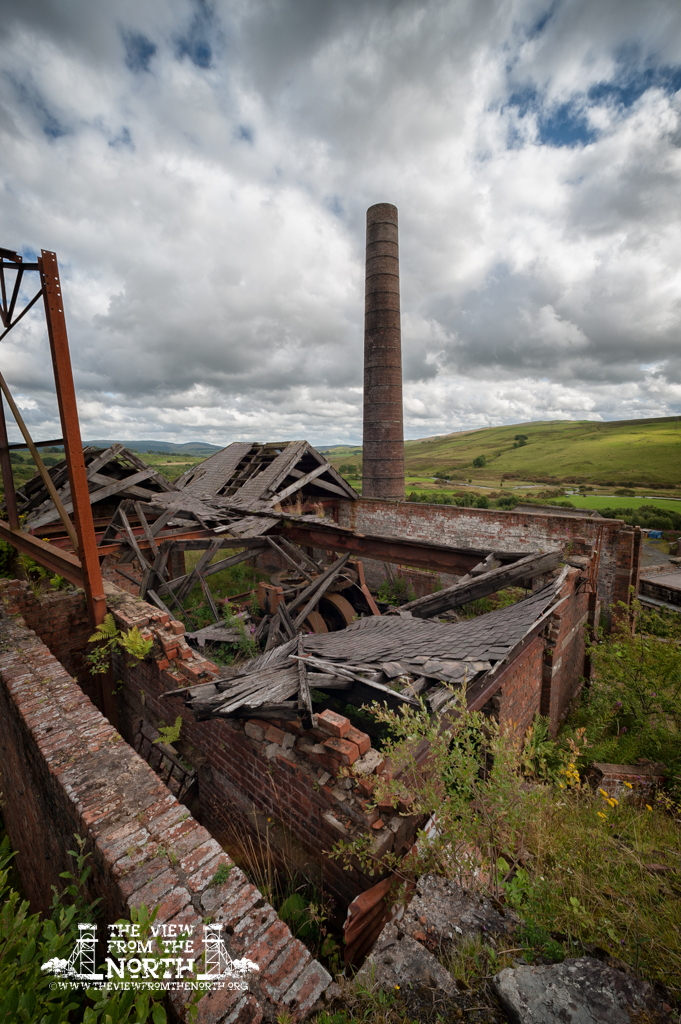
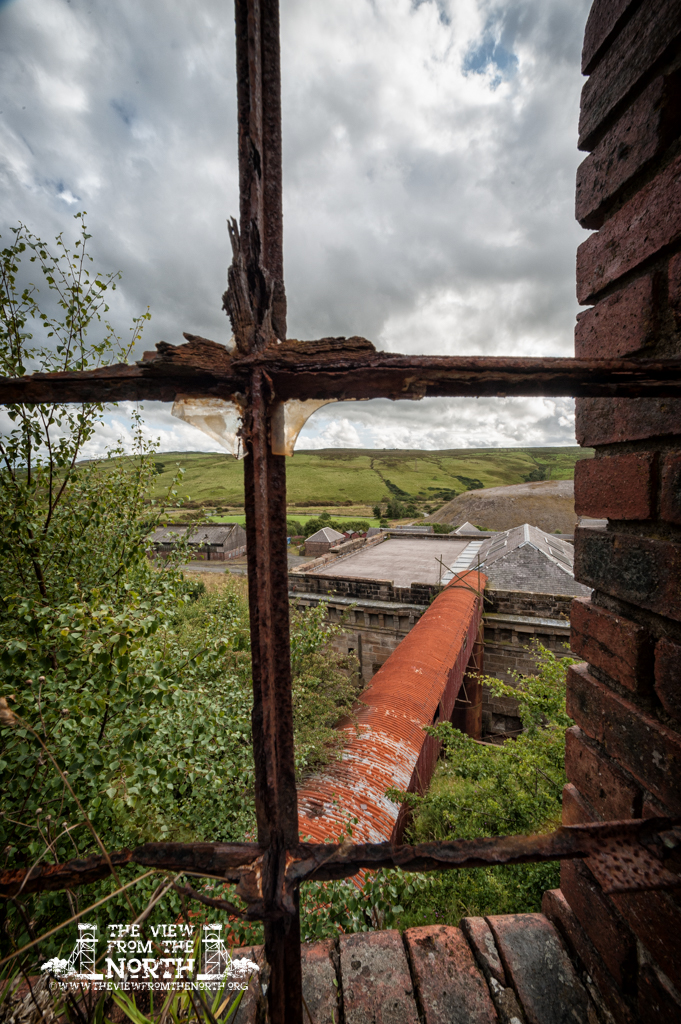
Looking down over the conveyor to the main works, and the landscape beyond
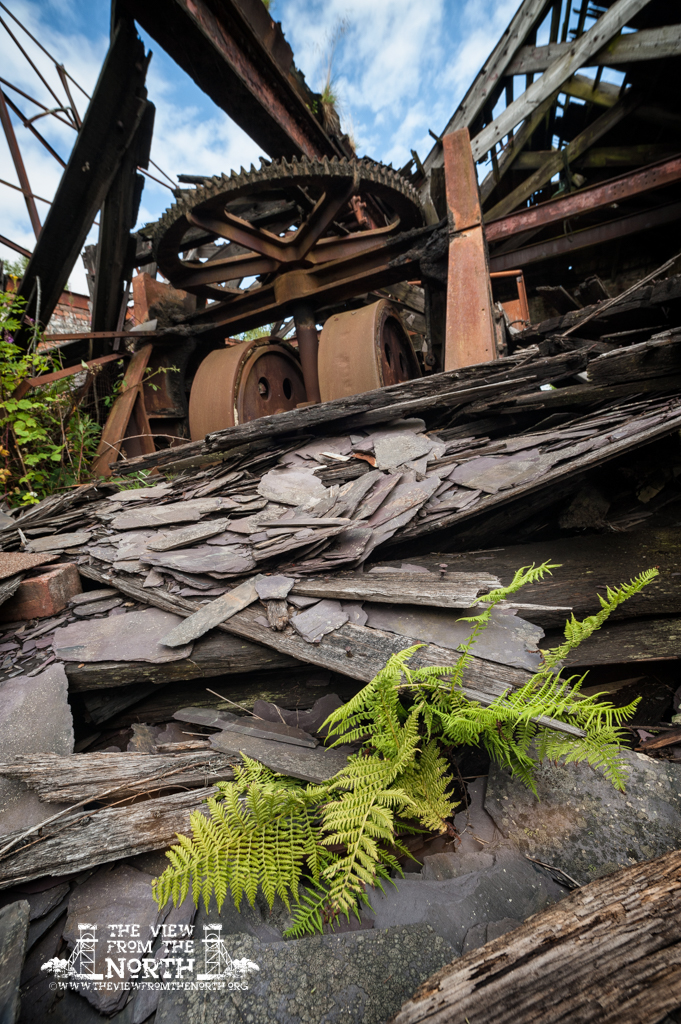
In the four years since closure, this place had fallen into abject decay (or maybe had been untouched since the works shut?) but looked an intriguing installation nonetheless. Amongst the fallen rafters and smashed up slate roof were two great iron wheels for crushing material. which was fed by conveyor to the buildings below. I couldn’t figure out how to get to them other than scaling down a 20 ft wall. So I continued to mooch in the direction of the works along the network of footpaths that ran across the hillside, until suddenly, I was standing next to brick buildings. Clearly the fencing budget was only sufficient to enclose one side of the site, so I just wandered in, albeit mindful that the railway group was active about 3o feet away.
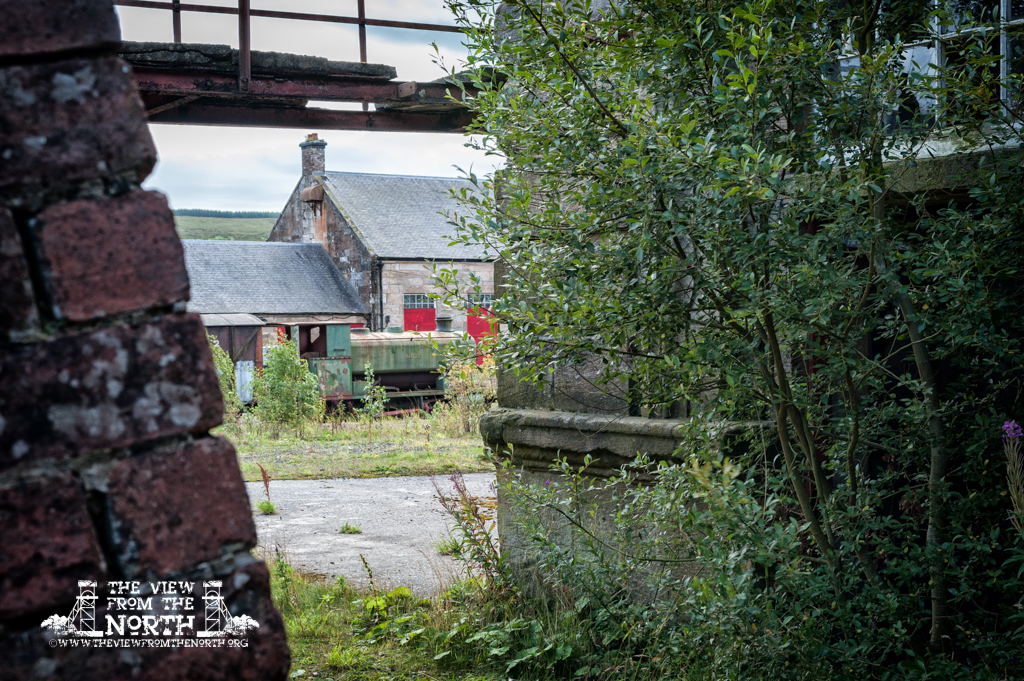
Looking across to the Railway Preservation Groups part of the site
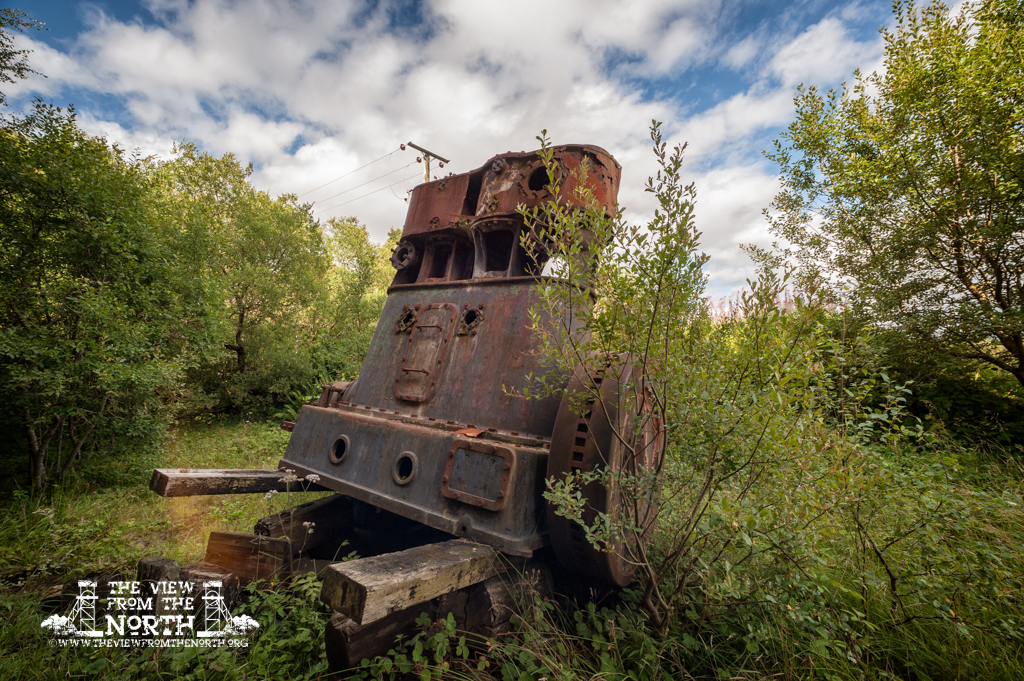
The first thing of interest was a large steam engine (a Howden compound enclosed high speed steam engine according to a correspondent to my website). It appeared to have been dragged out of the adjacent building and left on some railway sleepers, which seemed to be collapsing under the weight, leaving the engine at a somewhat jaunty angle.
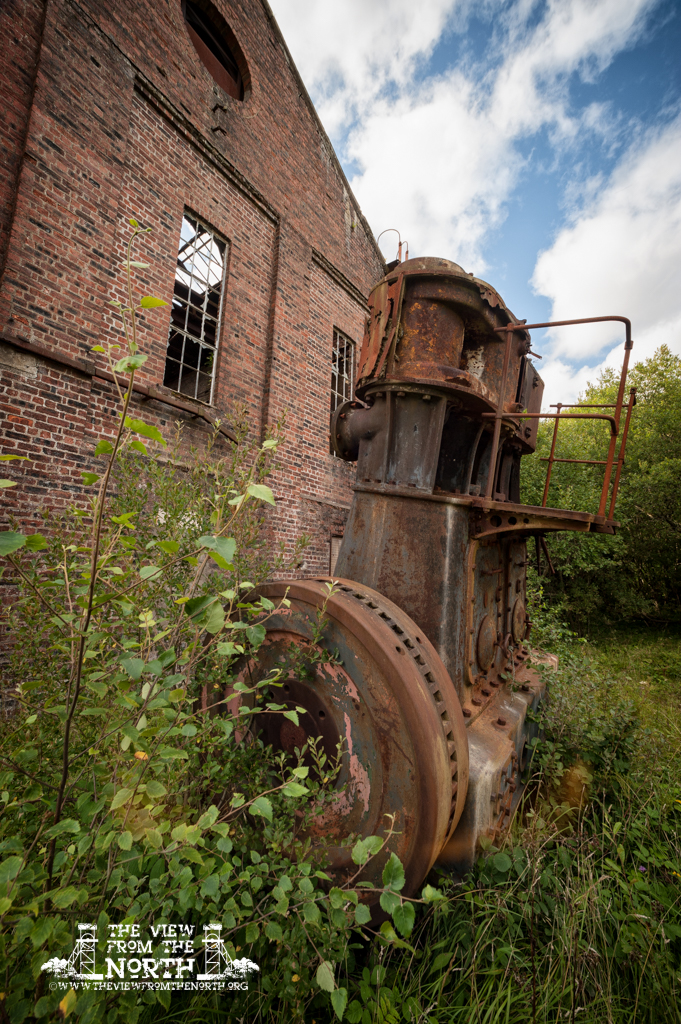
You can’t really tell from the above picture, but the one below shows the somewhat precarious position of this engine.
A breize block wall into the building had been smashed down so a quick venture into the darkness revealed some kind of workshop facility, with a number of machine tools rotting away in the darkness. Upstairs was a large empty space. This building was originally a power station that was built in 1917 to supply electricity to the Royal Flying Corps’ Aerial Gunnery School at Loch Doon which was never completed, it remained in operation until 1956 and supplied electricity to the works.
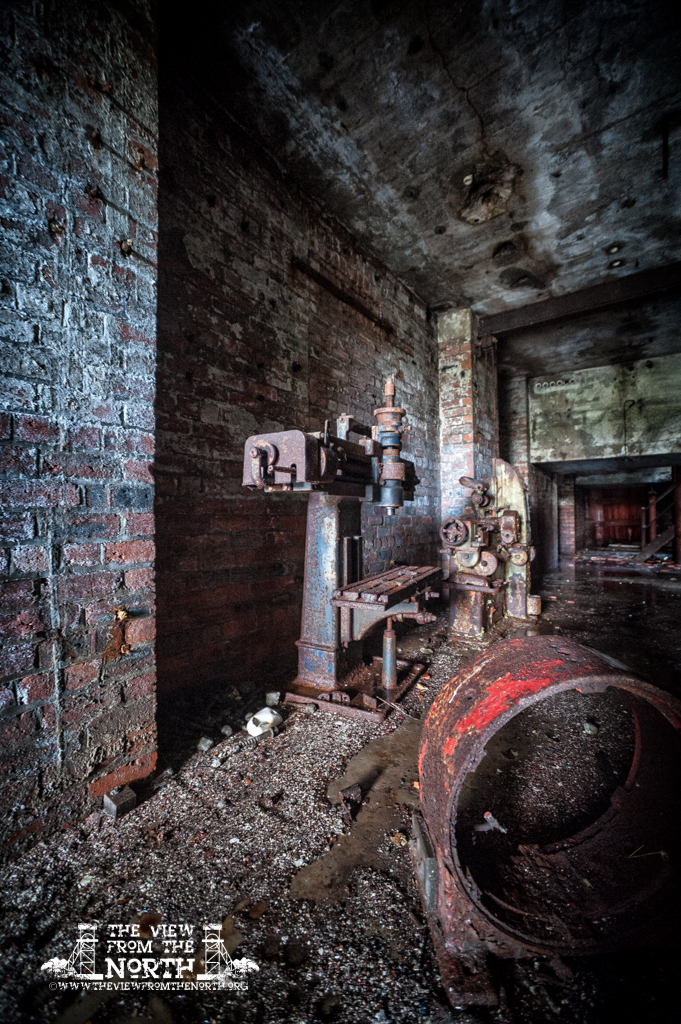
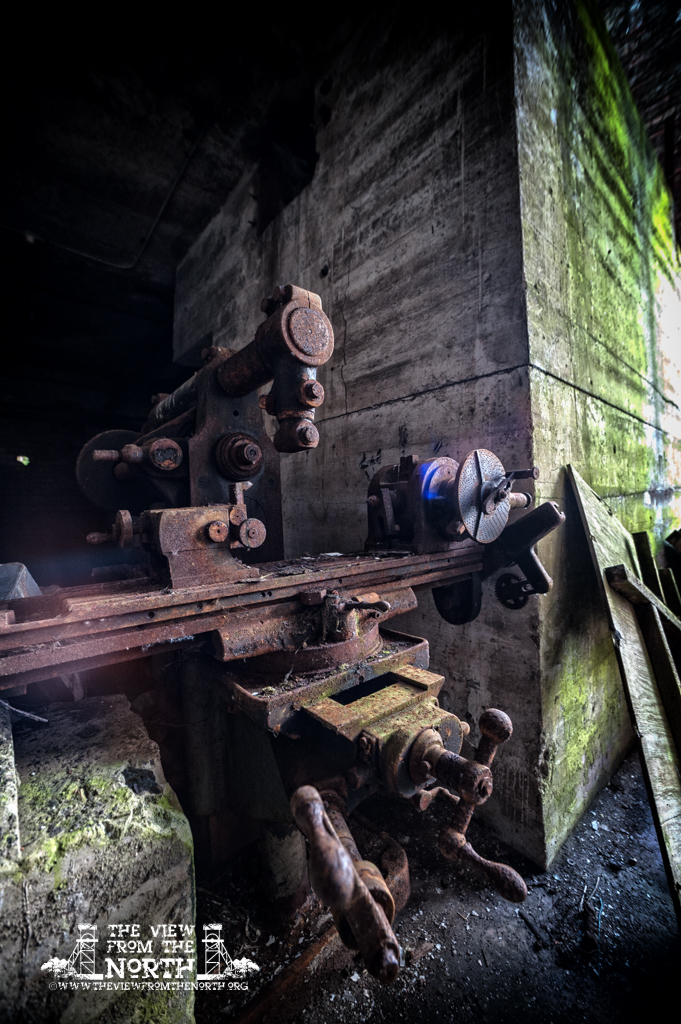
A couple of milling machines rotting away in the basement. Beyond repair by now I’d have thought.
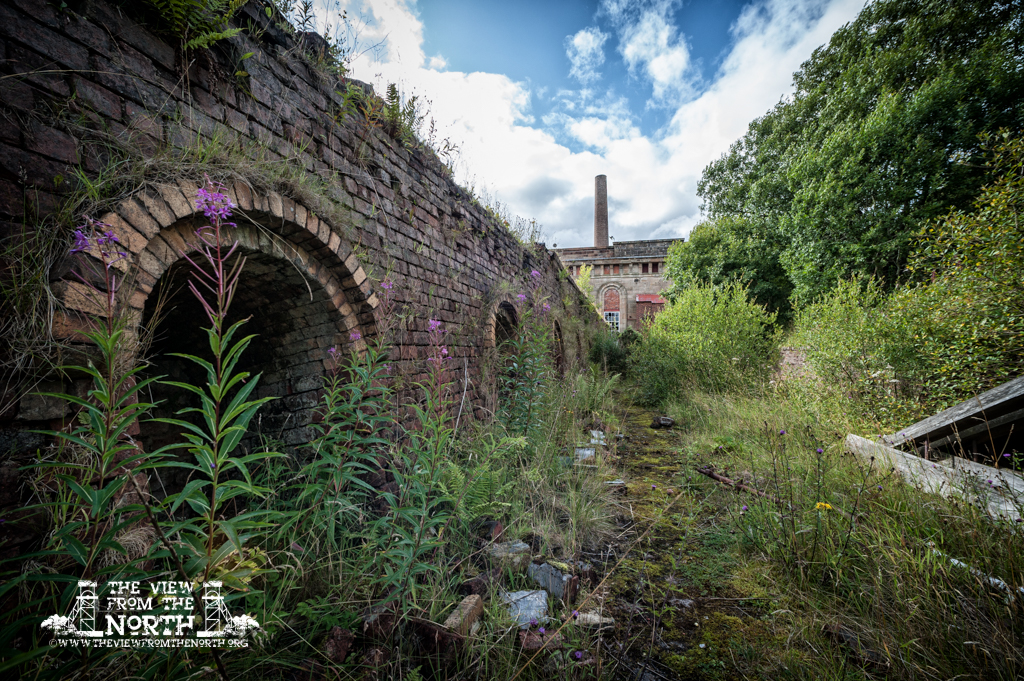
With not much else to see, I ventured outside for a walkabout and came across the Hoffman Kiln. This was similar to the one at Langcliffe albeit not as big.

A wrong turning took me down a dead end where I stumbled across some abandoned batteries. Naughty, I’m quite sure this kind of thing shouldn’t be left outside to just rot away into the ground?
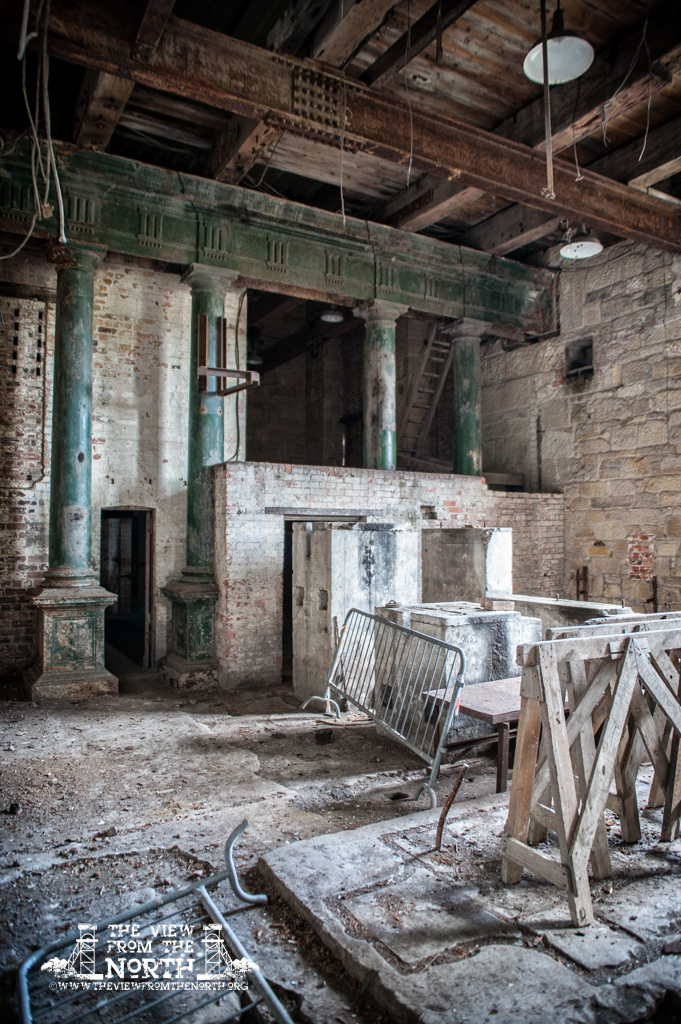
I’m told that these pillars are part of the original blowing engine from the sites original use as an ironworks. I’m not entirely sure of their function in that regard, but I love the Victorian approach to embellishing functional things that are rarely seen.


Leave a Reply